27 March, 2010

HiFi Letter from NYC 2010 (1): Setting up (yet again)

HiFi Letter from NYC 2010 (1): Setting up (yet again)

It's 4:00 am.
What to do if you are wide awake after nearly a day on the jet? Dreaming about the feisty stewardess from Beijing whom you had talked to for hours on KAL? No such impractical things for me.

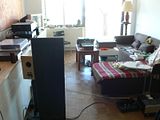
Time to set up my hifi. Hungry for some music, I started building the second-station first, though it is different and simpler than last year's incarnation. Remember the second-system is for really low-level listening at the wee hours (more on this in the same link). It must have excellent details at very low level. This year's version when I began:

Second-station
Digital: Linn Karik used as CDP
Preamp: ARC SP-9
Amp: McIntosh 2200
Speakers: Focal 705V

And as it is NOW, just a few days later:

Digital: Meridian 506-24
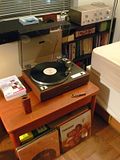
LP: Thorens TD-125/SME 3009/Benz-Micro Silver
Preamp: ARC SP-9
Amp: Almarro 205D (EL84 SE amp)
Speakers: Almarro M1A

This second system metamorphosed over the next few days. Things I noticed in passing:
-after I moved the Linn CDP to the main system, I substituted the Meridian. While the Karik sounded great as soon as I powered it on, this was not true for the 506. For several days I was not totally satisfied with the sound, but it came alive eventually. The 2 players should sound on par, though I'd give the Karik the edge still.
-the SE tube amp brought greater details, of course. It's amazing the efficiency of the Focal and Almarro speakers (despite their mid-80's db ratings)
-So did the Almarro speakers. Perhaps more on these when I have time.


Damn you, Maggie!

While I started to play some CDs which were delivered after I left NYC last time, I lost no time to build my main system. I decided this time it's going to be the Magnepan MMG. Damn those "proprietary" sockets and tiny screws and tiny allen wrenches!! After about 2 hours I managed to rebuild my main system, which is for another article. After all the strenuous work starting in the middle of the night, I was famished and went across the street for some FOOD. The sesame bagel with sausage and egg hit the spot, and the coffee lifted the spirits. Who said hifi nerds don't get enough exercise?

This year I experimented with many things in trying to bring the performance of Maggie closer to my beloved Martin Logan Source. It is impossible but the effort is worth it. Stay tuned.

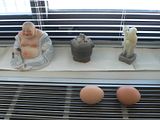
It's pretty cold here for the end of March. Mom had the heat on, which helped her to keep her hard-boiled eggs warm.

09 March, 2010

CD Recommendations (1)

CD Recommendations (1)

While I give lengthier treatment to CDs and performers in my companion classical Blogs, I am starting this new feature for practical reasons.

There shall only be occasional articles, covering only relatively new releases that can still be bought or ordered. I shall only choose CDs that appear to me to have the potential of wider appeal to hifi enthusiasts, and that means more familiar works as well as excellent sound. Ever since I started plumbing the depths of the library collection, I have bought few CDs. Here are some that I have purchased recently.

Horowitz
In HK, Horowitz in Moscow(DG) is rather popular, but other Horowitz live recordings deserve equal scrutiny. The recently released Horowitz Berlin Concert 18 May, 1986 (Sony) (2 CDs for price of one) is a MUST for his fans, and I am sure would also be a delight to audiophiles for comparison with the Moscow concert, which took place only shortly before. The programs are rather similar, with much "duplication". There are 2 more Scarlatti sonatas in Berlin than Moscow and just the opener, the Scarlatti K87/L33 would be worth the price of the CD. This sonata, also heard on The Studio Recordings (DG), has remained my favorite ever since I heard it on the indispensable HMV Recordings 1930-1951 (EMI), which despite the mono recording is still the best version. The sound of the Berlin Concert is splendid and the performances wonderful. The entertaining booklet too chronicles some of the happenings behind the scene. For me, this is a better recording than the Hamburg Concert (DG) released not so long ago, but what Horowitz fan would want to be without any of his later live recordings, all in good sound?

While we're on the topic of Horowitz, I'd like to mention the sometimes neglected studio recording, Horowitz: The Last Recording (Sony), to me one of his best CDs. The sound too. It is now mid-price, a bargain.

Beethoven Symphonies

It is surprising how many audiophiles have some classical recordings (particularly violin concertos) but do not own even a complete Beethoven Symphonies set.

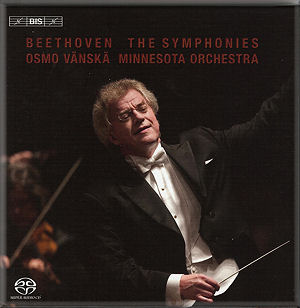
I have heard the wonderful Osmo Vanska with both his Minnesota Orchestra as well as the HKPO. After hearing some of the Osmo Vanska's Complete Beethoven Symphonies (BIS) from the library, I decided to purchase a set, even if I have already many versions. Natural and breathing performances recorded in sumptuous DSD sound. I don't really have a dedicated SACD player, but even on my humble Marantz DV-6001 multi-player, or on any other of my CD players, sound was vitally fresh. 5x SACD/CD for the price of 2 CDs is a good deal, competitive even in the budget sector.


04 March, 2010

Talk Vinyl: All My Turntables (Arms and Cartridges): A (Rambling) Overview

Talk Vinyl: All My Turntables (Arms and Cartridges): A (Rambling) Overview

In this day and age, the turntable lives a strange existence. Whereas once no one would think twice about buying one, and no one complained of "difficulties" in handling, now many view it with trepidation. While it's understandable if some novice has cold feet at first, it's inexcusable that many self-proclaimed "experts" (some also charge for their dubious service) tell people not to get into it because adjusting the tonearm and cartridge is "very difficult". Truth is, It is very simple, and good sound can be had for very little. If you ask me, it's a lot easier to get into than "serious" CAS (at least what people are doing, now so complicated it's bordering on the absurd). My experience is quite utilitarian, but here I chronicle it and hope it can be of use to some people.

Part I: Salad Days
With the first money I earned as a busboy (传菜员) in NYC, I bought my first stereo system in 1973. A cheap Harman Kardon receiver, horrible speakers, and a cheap Akai cassette deck, no TT. It was rather out of the blue. I never had any classical music experience in my Beijing Opera-suffused childhood, but listening to NYC's wonderful radio stations made me a convert very fast (the perennial WNYC, WQXR; make sure you listen to them, now easily via the internet, wherever you are; I still do!) . Lacking money to buy records I just taped the broadcasts. It was a fruitful period. Imagine, discovering Sibelius' Violin Concerto and Tchaikovsky's 4th Symphony for the first time!

Pioneer PL-10: still an excellent entry level TT
One year later, when I got more money I bought the PL-10 and started buying records. At the time, Dual and other more expensive TTs were out of budget for me. This TT, which is still with me, therefore holds a special place in my heart.

The PL 10 was Pioneer's base model manual turntable in 1973 or 74. It was their $99 turntable when the best-selling PL 12-D's price rose to $119. It has a little more plastic than the 12, but is essentially the same TT (belt-drive, same motor, platter, suspension, tonearm), differing only in the simpler anti-skating mechanism, plastic instead of metal headshell and lack of a cartridge setup device. The PL-12D is a legendary budget table. It's perhaps little known that it was designed by now-Marantz guru Ken Ishiwata. There is A beautiful article on the PL-12D in retrohifi, from which a little excerpt:

The PL-12D, is a belt drive system with an aluminium one piece platter, which comes with a choice of two speeds, 33 and 45 rpm; a manual action 'S' shaped tone arm, a SME style screw-on headshell and a detachable Perspex lid. Though the 'Anti-vibration sprung floating chassis' was one piece on which the platter spindle and the tone arm are fixed, it actually produces excellent results and was usually paired off with the Shure M75 range of cartridges.

I cannot remember what cartridge I first used. Maybe a Hitachi I recently found in my drawer. It was soon supplanted by Empire 2000E/II and III. This cartridge satisfied me at the time (but after I got my first Shure V15, I never looked back).

In NYC now I run 2-3 systems at once. The PL-10 now serves my bedroom system and I often play more scratched but desirable LPs on it. I habitually installed the least of my cartridges on it, but I sometimes felt it's demeaning of the TT. The simple tonearm is actually surprisingly good: it tracks well even at low weight, and tells you immediately of the sound of the cartridge. I have the idea of modifying the TT if I have time. At least the lead-out red/white cables need to be upgraded. Perhaps a speed box (its speed inherently is excellent though)? But the sealed bottom deterred me. I've not done an A/B comparison, but I strongly suspect this TT as a package is better sounding and more resolving than the classic Rega P3 (more on that later).

SME 3009i (fixed headshell): Enter the Shure V15
The second TT I bought in the mid-70's, based on either a High Fidelity or Stereo Review recommendation (yes, I was a reader), was a cheap direct-drive turntable kit. I forgot the name of the maker. Although it was a mistake, at the time I didn't much notice. The good thing about this bad purchase decision was that I had to buy a tonearm, and I bit the bullet and bought the SME 3009i (very expensive for me at $99), which I still use to this day. It was at this time that I bought the Shure V15 Type II, and later Type III and IV. My last IV stylus (VN45) just last year went out of service (belly touching the LP surface); adding up, my Shure's have provided me with 30+ years of service.

LP shopping in those days
A word about LP buying in those days. I started buying mostly at Korvette and luckily made the acquaintance of manager Marty Goldstein (some tidbits here (1963 Billboard), and here (1966 Billboard), who was an uproariously funny fellow. He used to be a producer/sales person of Westminster Records and husband of soprano Teresa Stitch-Randall, working at Korvette only after retirement. He and I got along real well; one time he even introduced a nice girl to me! Here's to your memory, Marty! I also occasionally bought at Sam Goody's. When Record Hunter came on the scene, I became a regular. It too is gone. I did not get a CD player till the late 80's (a Magnavox 1-bit) . I got ready to dump my LPs. Then one day, before giving my Milstein Solo Bach away I just A/B'ed it with the CD. There was no contest. It was a life-defining moment. After that, I started buying used LPs, lots of them. When Tower Records opened their Annex, I was in heaven. Here was a place where one could buy dis-continued LPs. Sometimes you found treasures, such as brand new BIS La Spagna, BBC Flight of The Condor etc. No wonder you frequently found the Chinatown HiFi gang there. Even better, it started carrying used LPs and the store was open till midnight, everyday. Never a dull moment! Well, that's history.

The Stuff of Dreams: The Dahlquist DQ-10
I upgraded my stereo around in the late 70's to Pioneer separates but they were not too good either. There was also another pair of direct-sale bookshelf speakers that was better than my first pair but still better forgotten. I knew my speakers were the limiting factor. I didn't have any hifi friends (a good thing) but I did have a good friend in Engineering School who bought a nice system after he got a real job. It was SAE equalizer preamp/amp, a Thorens TT and most importantly, the Dahlquist DQ-10, which I lusted after for many years. He was (is) one of those friends who widens one's horizon. Hey, introducing me to Sibelius and Bruckner immeasurably enriched my life!


Thorens TD-125: still formidable
After I finished my residency and got my first real job I bought what I consider my first serious set of hifi. At Audio Exchange I finally got a pair of my coveted Dahlquist DQ-10, for $500. I was lucky as at the same time I spotted a Thorens TD-125 with an SME arm board, which I snapped up for $100. I went shopping for preamp/amps, and finally decided on a pair of B&K rather than Adcom (another mistake I think). When I installed my 3009 on the 125, to say the least I was dumbfounded by how superior it was to my direct-drive, which I gave to a friend. The system made me quite happy and it stayed with me till now. I basically used it all along with my Shure V15-IV. The TD-125 is truly a marvelous TT, built to last several lifetimes. Read this great article on the TD-125 in the retrohifi site. For more pics of pristine samples, some with 12" arms, click here.

At its current price (prices has not gone up as much as the 124) it's a great bargain. Before my recent serious re-building of my NYC hifi this TT was my primary TT. When the V15IV went caput, I installed the Benz Micro Silver (which did not sound too good on my Audio Technica direct-drive, on which more later) and what a brilliant TT it is again! Fed into the ARC SP-9 phono stage It gave my main system a run for its money. Personally I feel the BM Silver is a lesser cartridge than the lower-ouput Gold, but I feel it still gives more with classicals than a Shure V15-IV.

Part II. LP in HK? You got to be kidding!
For my first 2-3 years back in HK, I did NOT bother with LPs. In NYC, although it briefly gets humid in the summer, I never had to clean LPs. NO, I'm not one of those who likes to clean LPs. I felt the weather in HK really not suitable. My LP collection stayed in NYC.

Then, fortuitously, the husband of a good friend of my girlfriend was an audiophile who was switching to CDs, and he generously gave me his LP collection of classicals. This was in the days before the LP revival. People gave away their LPs and TTs. A colleague also gave me his un-restored Ariston (fore-runner of Linn in the UK) RD-110 TT, which I later gave to someone else. This was also in the days before the popularity of record cleaning machines. Many of the self-washed LPs sounded quite dull. A cautionary tale.

Rega P3: Good, but not great.
Suddenly armed with a collection, it'd be a sin not to have them played back. I decided to do it with little fuss and got a brand-new Rega P3. I forgot what cartridge I used at first but soon it was the Elys MM. By this time I was fully into HiFi, and the Rega never did sound as good as it should to me. Although the arm is good, the TT is only adequate and I felt the Elys lackluster. I knew I had to move on. It was accelerated pace from this point on.

Thorens 150 and Linn LP-12: Virtually the same (for a great TD-150 article, click here; for more pics, click here).
Then I bought for cheap a Thorens 150 which even with the flimsy SME 3009 S3 arm in original plinth blew the Rega P3 into pieces . Roughly the same time I finally got a Linn LP-12 Valhalla. Using the same S3, I felt the LP-12 way over-rated, the cheap Thorens every bit its equal. Both delivered music with more zest than the P3. Rhythm and pace, that's what these suspension tables do well, much better than even very expensive tables with solid plinth and no suspension. If you ask me, it has always been my opinion that the TD-150 (and the similar TD-160, which you can still find NOS in 秋叶原) is THE suspension TT to have. Its price is ridiculously low and its performance up with the best of its brethens. It should also be a tweaker's delight. Needless to say, the P3 was sold.

At this point I also started to experiment with cartridges. There was a period when I tried the Sumiko Blue Point high-output MC. It was lively and dynamic as hell but the bass was blunt for my taste. That ended when Sumiko's suspension proved unreliable. The excellent Goldring 1012 MM was so fast it must be one of the best cartridge for rock; however its kinda rough and happy nature proved just a little unsettling for classicals (but great for Stravinsky). Even then I still have fond memory of it.

Garrard 401 and 301. Invincible!

The next pivotal moment came when I got my Garrard 401, in a gigantic aftermarket plinth (not the Loricraft plinth in the pics). It came with a cheap RB-250 and a Supex cartridge. One play and I knew it! Once you get used to its phenomenally solid and tuneful bass (not like the deadly kind delivered by today's so-called super-turntables; I won't mention names) there's no turning back. Let's not forget Supex either; they made great cartridges and was OEM for Linn (more here, and here).

Then things happened in rapid succession. There was this this Malaysian who's leaving HK. I bought from him the Lowther TP-1 (with Queen Ann's legs) as well as the Garrard 301 (beige, in a terrible cheap plinth) and EAR 834P phono amp. I removed the arm/cartridge on the 401 and compared it with the 301. The sound was very close. Any difference was as likely due to the plinth as the TT. Since the 401 was much bulkier, I reluctantly sold it. The 301 is now on long-term loan to a good friend, who's built a nice plinth for it. At around the same time, one day I walked into my neighbor's LR and found a room full of vintage hifi! I didn't know he used to sell things in Apliu St. I bought a grey (said to be from RTHK) Garrard 301 from him, but to this day I haven't restored it!.

Back to the sound of the 401/301, I think they have few peers. Even with a cheap Rega arm, its composure and dynamism cannot be easily rivaled, let alone surpassed. Even from very expensive TTs I fail to hear the rock-solid, yet lively and musical sound of the Garrards. Yes, the LP12 and Thorens 150 were sold after I got into Garrard.

Origin Live RB-250, Benz Micro Gold, Denon 103
I decided to get into MC. So, I decided to get a better arm. I opted for the Origin Live-modified RB-250, just basic structural mod. The first low-ouput MC cartridge I got was the Benz Micro Gold. This was the time when the "water" goods of BM were outrageously cheap. This combination satisfied me. Benz did not seem the most dynamic of cartridges, but it was balanced and nuanced and a great match with the RB-250. At the same time I also got the high-ouput Silver, which I was not to use until last year (see above). I can attest that the Silver lacks the refined quality of the Gold. Also, since many people were using the more expensive Ruby at the time, I'd like to say I always thought the little increment in performance not commensurate with the increment in price. I'd be curious to hear the current MC 20E L. For their low prices and smooth sound, the cheap Benz Micro's are bargains, but I'm not so sure of their more expensive offerings.

Then enter the Denon 103, bargain of bargains. I organized a group purchase for my cheaptubeaudio group. From Germany, if I remember correctly, price was $800, still significantly cheaper than the BM Gold. All the good remarks about the 103 are true. It sounds big, bold and colorful, a great cartridge for very little and since I tend to tun several TTs at once I doubt it will ever be out of my life. At the time I bought also the Denon 304, Ortofon MC15 Super II , which I was not to use till later.

Clearaudio Champion and Audio Note TT1
When HiFi Duck first introduced the Clearaudio Champion, they sold it for a VERY reasonable price, and I got one. Rather than using the stock arm I installed my OL-RB250/Denon 103 on it. Compared to suspension TTs I liked the fuss-free operation and the sound was quite good. It did not have the authority of the Garrard but was still quite satisfying.

I flirted briefly with the Linn Basik with Akito arm. It performed quite wonderfully with the Goldring 1012 MM but not so well with Denon 103. It's worth a spin but not one to keep, even as a second TT.

Then one day I got at a very reasonably priced Audio Note TT1 with RB-300 (though lead out is AN silver wire). It is basically a Systemdek IIx. After I installed my Denon 103 on it, the performance of this TT surprised me greatly. Its full, tuneful and dynamic sound rivaled the Garrard and I think outstripped my previous LP12 for my taste. The screws for adjusting the springs are accessible on the top and that's a great blessing.

I then installed the Ortofon MC 15-II on the Clearaudio Champion. This is a strange cartridge. When I first installed it (after a long time spent with the Denon 103) I hated the sound. After run-in and adjustment of loading it began to show its qualities. It's not for those who like the full-bodied Denon 103, but its superb analytical quality is not to be dismissed. I have been thinking of switching the Ortofon to the AN TT1 and the Denon back to the Clearaudio. I reckon that would be a better match for both. Neither has made me forgot the Garrard, and one day I have to get the grey one going. Till then these 2 humble TTs are what I use now in HK. Unlike in NYC, in HK I only play LPs for visitors.

At this moment, I must say most visitors prefer the more rhythmically saavy AN TT1 to the Clearaudio Champion. I think both are bargains at current second-hand prices, but the AN TT1 (hence Systemdek) is something really special and certainly under-rated. AN UK has good taste in TTs (their TT3 is basically a Voyd!). As for Clearaudio, for the second-hand price of a Champion it's a good buy for fuss-free operation, but I have never been really impressed by its more expensive offerings, all too much acrylic and ludicrously expensive (this applies to much of modern TTs, especially German ones). Their "neutrality" is a mask for lack of soul, and that applies even to their "statement" products. Phenomenal bass maybe, but where's the swing?

Aside from a Thorens 124 and an Audiomeca Roma I have yet to put into operation, that pretty much sums up my TTs in HK.

Setups used right now in HK:
Clearaudio Champion/OL-RB250/Ortofon MC15-Super 2 and AN TT-1/Silver RB300/Denon DL-103 (both fed into EAR 912; while researching I came across my own article on EAR which I have forgotten!)(sometimes I toy with the wonderful and cheap ICL Model 4 phonoamp and for the Ortofon cartridge the Ortofon MCA-76 phono pre-preamp)

Part III: Re-building New York
Recently, I'm spending more time in NYC, and hence started to rebuild my hifi system there. One big difference between NYC and HK, for me, is that I play almost exclusively LPs there. Although hot and humid at the peak of summer, the duration is relatively short, and my LPs have lasted for decades without spoiling. No mold, no washing needed. Yes, I know some of you're going to say washing gives better sound, but I'd like to remind you I have heard too many records ruined by washing. An audiophile friend washes every LP he gets with his own fluid and everyone sounds noisy. One time we asked him to play an unwashed one and it was quieter! So be careful. My policy is wash only if the LP absolutely needs it. No, in NYC I don't even have a washing machine.

I was playing so many LPs every day that I started to feel the need for more TTs. When Amazon offered the Audio Technica AT-PL120 direct drive TT for $1xx (I see it has gone up in price significantly), I grabbed one. the built-in phono amp was not bad and it even came with a cartridge. This is a poor man's Technics SL-1200 (probably the only TT to have its own wikipedia entry). It works beautifully and efficiently, making you worry less about hifi since playing a record is so easy. Its sound is decidedly lean, so I soon ditched the stock AT (DJ) cartridge and now use it with a Grado Gold, a good match. No hum. One day I shall do a detailed comparison with the Technics owned by a friend. And I installed a Denon DL-102 mono cartridge on another headshell for my substantial mono collection (many Heifetz LPs!)

Then I got another direct-drive, the Revox B791. This is a work of art, though some samples are prone to failures. For very little you can experience a tangential arm that is a forerunner of the more famous Goldmund. If you don't have the installation kit, installing the cartridge can be a nightmare indeed. Its sound is decidedly direct-drive, very analytical. It is substantially superior to the AT-PL120 in resolution.

Last time I visited NYC by chance I came across a pristine sample of Linn LP-12 Valhalla. It came with original box, including the Ittok arm. All at a price I could not refuse. I first installed the Benz Micro Silver and though the sound was very good it was still not quite special. Just recently I installed the Denon DL-304, and the smooth sound was a distinct improvement. And then I got a second-hand (shoebox) Lingo power supply. It took me quite a while to get around the large electrolytic caps of the Valhalla board to unsnap it and install the Lingo board. Result? Well, I think the improvement was marginal, not as big as a swap in cartridge. I think if one just plays 33's it's not really worth the money, but 45' users (unfortunately I'm not one) would find the convenience over-riding monetary concerns. The real million dollar question is, can the LP12 trounce the Thorens TD-125. I think it may be quieter, but likely not better sounding.

Now my NYC setup is as follows:
Primary system: LP12/Ittok/Denon DL-304 (low output requires my PS Audio GCPH, a bargain as well as the most convenient phonoamp I've ever used) and AT-PL120/Grado Gold for stereo playback; AT-PL120/Deno DL-102 for mono playback (both use my BAT VK-P5 phonoamp, an outstanding bargain)
Secondary system: TD-125/Benz Micro Silver (phono section of ARC SP-9)

I have to stop somewhere. Detailed reports on the various phonoamps shall have to wait till later.
The Yumcha Diaries: 20/02/10 and 27/02/10

The Yumcha Diaries: 20/02/10 and 27/02/10

Since the last entry, we were very happy to have met up with many old friends, sometimes boosting attendance to a baker's dozen, which is a lucky number in Chinese indeed, particularly for the New Year.

20/02/10 House-warming for tubediyer
Last week we even had a newcomer, Alex, to yumcha. Since quite a few at the table are Tannoy users, we're delighted that he too is one. After yumcha, most of us proceeded to tubediyer's place for a "house warming party". His rebuilt country house is spacious, yet feels cozy. With all his stuff, the brand new place already feels lived-in. Most interesting is an adjacent semi-detached room stuffed with LPs and parts, all covered with dust from construction.. A lovely place to hang out. I'm sure we shall return often.

(L/R: now/before; click on pics to enlarge)

To my chagrin, I found I had not replaced the card in my camera. Fortunately I had taken some pics in an earlier visit. For those who do not know, tubediyer, true to his moniker, not only DIYs but also designs and manufactures cheap and excellent parts, particularly transformers. Cheaptubeaudio indeed. Gears (due to DIY nature, changes all the time) used on this occasion:

Turntable: Technics 1200 MkV with Audio Technica AT33 (Shure V15Vx before)
Phonoamp: EAR 834P (on loan from me)
Digital source: Sony DVP-PR50P as CD player and transport
DAC: DIY DAC with 8x Wolfson chip
Preamp: On this day a DIY "Jadis 200" (NOT tubediyer's job) and a repaired Audio Note UK M3 with much upgrades
Amp: DIY "Ongaku" (silver secondary for the output transformer)
Speakers: Onkyo Scepter 5001 flagship with diamond tweeter and midrange!!!
Cables" cheap Gotham, Sommer etc

The "Ongaku"
We had listened to the previous incarnations of the "Ongaku" before. There is little question it is a very fine amp made even better, tonally balanced and powerful for its rating (<20 style="font-weight: bold;">I prefer using a preamp (especially with the low power on hand for such a large speaker), even a modest one, lest music gets stripped of dynamics and rhythm.

Diamond drivers

The Onkyo Septer 5001 was Onkyo's flagship. The finish is very beautiful and the speakers are quite neutral sounding, filling up the large room. Unlike some of their modern counterparts, the diamond drivers in no way call attention to themselves (Ditto the Beryllium tweeter of the Yamaha NS-1000, which is not colored like Focal's more recent effort). Whether beryllium or diamond, the Japanese had done it long ago. So much for the current hype on their (re-)use by some hi-end speaker manufacturers as innovation. One cannot help feel whereas past designers used breakthroughs primarily for improvements in technical matters, their modern counterparts use exotic material as gimmicks.

Some caveats: despite its rated 90 db efficiency and proclaimed extension down to 20 Hz (no +/- db given), perhaps due to the new woofer surrounds, but even more likely due to the limited power on hand, bass was on the lean side and extension not impressive. I suspect voicing with more powerful solid state amps (such as Onkyo's own Integra) . Next time we shall bring a beefy ss amp, perhaps Bryston?

pic: innards of the AN M3

DIY preamp vs Audio Note M3 (with upgrade options)
One of the greatest problems with DIY lies with balance. I'd say the majority of DIY gears I have heard (and I have heard many) are not neutral sounding, and much is way off in tonal balance. As I always said, the most important thing in DIY is emphatically not material building blocks, but the human ears. Great designers are also good listeners.

The DIY preamp on hand (the 2 small aluminum boxes in one of the above pics) is based on the Jadis JP-200. While it is well built and one of the better efforts I have heard, it too did not escape the common fault of mid-range leaness. Certainly, the sound bore NO resemblance to the real thing, and I am quite familiar with this preamp as an old colleague at work used it. I have to say here that I'm not overly fond of Jadis. I always thought that, maybe with the exception of the early JA-30 (KT88), cheap Jadis (like the Orchestra) is frequently a lot more cheerful than their expensive siblings.

It's funny, if you google pics for the Jaids JP-200, what you get overwhelmingly is DIY kits and not the real thing! :-) It's a veritable industry. A circuit board can usually be had for <<$100. When we switched to the Audio Note M3, there was just no comparison. With dual power supply trans, dual chokes and transformer outputs, it had an effortless ease and midrange splendor that the DIY preamp could not hope to match. As for what broke down before, I cannot tell. Just say it was quite alarming and costly.

Digital playback
The venerable Sony DVP-PR50P, nick-named "Sony-Studer" for its resemblance to a miniaturized Studer 730, served well as a transport for tubediyer's parallel dual-differential Wolfson 24/96 DAC. The sound of the DAC is crystalline and solid. However, overall some of us preferred the less solid sounding but more rhythmically involving analogue output of this humble player, no slouch! More on the player later.

Analogue Playback
During the last visit I set up the turntable for tubediyer for the Shure V15Vx. He hadn't used his Shure for 10 years, and the sound at first was sluggish. After a few play it started to slowly come to life. By the end of a few hours it emphatically outperformed the digital playback. This time at the request of tubediyer for a MC, whlee very quickly swapped in the Audio Technica AT33. Kudos to him, even without the help of alignment tools it tracked perfectly. It's a second-hand model and sound was just a little too sluggish for me at this moment. I prefer the Shure. oozz suggested that removal of the shell would improve the sound drastically.

Afterwards we had a wonderful BBQ, pics of which you must surely have seen.

27/02/10 yumcha saw 2 new friends, Wai and Patrick. The two came to my place to dig in some CDs. davwong also came and we shared some LPs together. A nice change from focusing on hardware.

02 March, 2010

HiFi and Film: Lisbon Story

HiFi and Film: Wim Wenders' Lisbon Story

Just coming off chatting about Portugese chicken, and since we were just talking about Wim Wenders' Paris, Texas a short while ago, I thought of his later film, the rather odd 1994 Lisbon Story.

A thorough review of the DVD
New York Times film review

This is really a concocted film, an excuse to film a beautiful city, even more to film a mesmerizingly beautiful lady, lead singer Teresa Salguiero of the group Madredeus. But it's wonderful nonetheless.

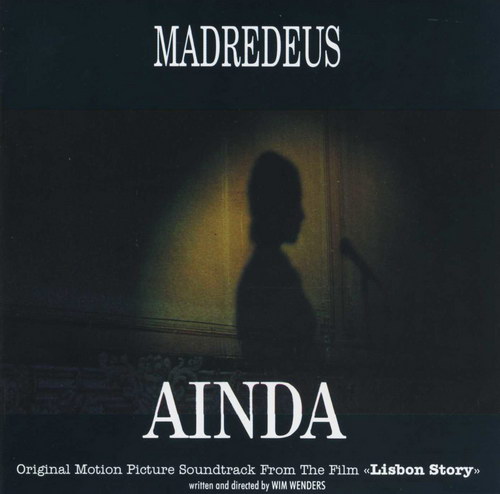
The raison d'etre of this post is the wonderful soundtrack, Ainda. Since this film, like the protagonist in the film, I have fallen in love with this lady and subsequently bought many of the group's albums. But I have to say this one is still the best, and the only one you need. The voice is sublime and the arrangements detailed and spiritually calming. However, they do have a certain sameness about them. Their style is like a modernized fado, less angst and smoother, yet not insubstantial. Unfortunately, this CD appears to be out of print, though you can still manage to hear much of it via the net and youtube.


19 February, 2010

Talk Vinyl: Futuristic and Miniature LP Devices

Vinyl Talk:
Futuristic and Miniature LP Devices

On the train from Guangzhou to Shenzhen I was reading the train magazine. Imagine my surprise when I noticed coverage of a LP device by Korean designer Rhea Jeong called the Void. Although this is a concept design I think in the future it may be feasible.

The Void was said to be based on The Vinyl Killer, a VW toy car with built in stylus, amp and speaker (click this also). Don't play your treasured records! I think I may get one just to trash a few records. This is already a cult classic. What's even more stunning was an art installation called Yokomono (also click here). Stunning!

While researching I came across yet another elegant concept design called the Linos. Too bad it's still a concept.

Returning to earth, I found something that is more practical. The Crosley Revolution Portable Turntable shall be available soon. I am definitely going to get one. imagine, you can bring it to CAS people's house, to show that CAS really does not live up to old analogue vinyl sound!

Below is a fun youtube of the Vinyl Killer


10 February, 2010

主编的话: 虎年的前瞻

主编的话: 虎年的前瞻

踏入 2010 年后,虎年在即,忙七忙八,没太多时间弄音响。 我们中国人已要过两个年,香港人更把年底的圣诞节也纳入,忙上添乱。有些要说的在元旦日的文章里说了,不再重复。现在要出几天远门,就在此跟各位拜个年。 祝各位身体健康,音响玩得开心

有几篇文章即将出炉。有一篇长的已写了大半, 记载的是我玩黑胶的历程。

另一篇这两天才构思的, 缘由 tubediyer 最近在 JC Letterbox 提及的 Sony "垃圾铲" DVP-PR50P。这一部港币 380 的玩意 (友人 cpsjj 发现的),我已玩了一阵子,是一部不折不扣的《巨人杀手》(giant-killer)。

友人 Vash 又提及了另一部十多年前轰动一时的 CD 机(其实是一部 Discman),是获得 Stereophile 赞扬的 Radio Shack Optimus CD-3400, 亦即是 Akai PD-X73 (也是几百元)。 我手上刚有一部,荒废了多年,昨天拿出来搞了一下, 居然还能工作。 我觉得这部机器不坏,但是肯定没到真正《巨人杀手》的地步。那么,为什么当年会那么威风呢?这值得探索。

过了年我会把这两部隔了几代的 CD 机作个有意义的比较。 更会加入另一部 top-loading, 也用 ROM 的机器,Elekit TU-878CD。一切昨天已部署好,也作了初步聆听, 只待深入了解。

新年快乐!

17 January, 2010

The Yumcha Diaries: 16/01/10

The Yumcha Diaries: 16/01/10
Rituals

Yumcha is kind of a ritual. Although a eating activity, it centers itself on a beverage and the conversation that brews over it. I think most people just went for meeting friends. This day was even more so, as JC was in HK, bringing with him a few rare guests. On this day, he was every inch the host, and the 13 of us had a good time.

While camera talk has continued unabated, a newly shaven tubediyer explained first the notion then the procedure of the "consecration of the house" (for lack of a better English term) prior to moving in. 不是普通入伙仪式那么简单,更像入伙乾坤大法。The ritual involved salt and other 风水 peculiarities, of course terminating in firecrackers.

Termination of cables is yet another myth-laden subject and certain people make a ritual out of it. Old friend stardust and I had a good discussion of our favorite Gotham cable. How do you terminate (for RCA) a model that has 3 conductors and 2 shields? I think most people would opt for using only 2 conductors, fewer 2+1- and even fewer 1+2-. How to connect the shield is another story. While most of us would leave one end unconnected, some would connect at the distal end while I out of routine connect at the proximal end. This has to do with whether one adopts "star grounding". Of course, one can reverse the cable and use it. Interestingly, stardust told me he obtained rather better results connecting only the outer shield for this particular model. Equally interesting, he told me the factory-terminated cables sound rather different and better! This should make those who pay more money feel better.

Too bad I had to go after yumcha. JC went on to a marathon home-visit tour and a few people went on to visit ghost. A beautiful day was certainly not wasted.

16 January, 2010

The Yumcha Diaries: 09/01/10

pics: Crossover and drivers of Yamaha NS-1000 (pics courtesy of thomasc2; click to enlarge)

The Yumcha Diaries: 09/01/10

Yamaha redux

A little while ago, in R33 thomasc2 posted some wonderful pics of innards of the Yamaha NS-1000, one of my favorite speakers. That's the first time I saw the substantial crossover. Then, being the DIYer and tweaker that he is, he took out the tweeter and mid-range and placed them outside the box. The speakers now look like some kind of old KEF or Sequerra (pic here)! After yumcha, 3 of us visited him. His system:

-Source: DIY CDM-4 transport into DIY TDA-1541 16-bit DAC (phono not used that day)
-"Preamp": DIY stepped attenuator using AB resistors (the CJ Premiere 7 used for phono only)
-Amp: Jadis JA-200
-Cables: Generic, mostly DIY

All of us were envious of Thomas' room, spacious and with high ceilings. All 9 people at yumcha could have easily stuffed into it. It is a good sounding room with no significant audible problem, even with minimal room treatment. The sound was relaxed and non-fatiguing. From slower vocals to violin music, everything was rendered well. The "Yamaha" sounded very open, but I was not sure HOW different it is from stock form. Thomas told me there was naturally less boxiness overall, and that he thinks the treble and mid-range outperforms his Wilson Watt 2/Puppy 3. I would certainly think so, particularly with tube amp!

For my taste, and this is nit-picking, I'd have appreciated a wee bit more rhythm and pace (P.R.A.T.) in certain music. I think that may be due to the passive preamp. When it comes to the preamp, thomasc2 and I belong to different camps. He believes in Less is More, and hence in the passive attenuator (particularly with a strong amp like the Jadis), whereas I believe an active preamp is essential in preserving the rhythmic, and hence dynamic, stucture of music. But then this division is common and not deterrent to enjoying different tastes!

Thomas is a meticulous person. One knows that already from the way he took apart and re-assembled the Yamaha. He told us he also went over his Jadis and found a lot of resistors have drifted way off, even opened! There was a lot of stuff lying around. Next time, I'd love to hear the Wilson and his DIY transistor amp.

02 January, 2010

The Yumcha Diaries: 02/01/10

The Yumcha Diaries: 02/01/10
It's Meat Meat, Meat!

The weather warmed up a little. I arrived late for the first yumcha of the New Year, and was glad to find some old faces among the seven of us. The waitresses continued to aggressively peddle their coupons, an irritating practice that is unlikely to abate. Cameras once again dominated the conversation. It makes me even want to take up an SLR again (I still have my primitive Minolta all-manual).

As we had a dinner gathering to attend to not much later, five of us went for a little sojourn at BenYC's. His Jensen and electronic crossover sounds different every time. By the time the setup started to warm up we had to depart. On our way I found out BenYC has a pair of Jensen fullrange. We had an interesting discussion on the possibility of using the fullrange and his current tweeter and bass. That would likely obviate the need for the electronic crossover for at least the mid-range up.

Then we all went to the dinner party. The host's place had been recently meticulously renovated, and looked a million bucks. Just days ago he had hooked up a make-shift system in haste for the party:

-Digital: Rega Apollo via Mogami interconnect directly into
-Amp (both with volume knobs): Dignity Audio 6550 SE amp first; then ICL 300B
-Speakers: The MIGHTY Klipschorn hooked up with Belden 9497
(lying dormant: TT; Counterpoint SA2/5.1; Melos 333; Wadia cdp)

Meaty Sound
As soon as we walked in, we were greeted by fulsome sound. Really, plug anything into the mighty Klipschorn and it will sound great! The percussion on the Tony Bennett and Jimmy Smith CDs all sounded incredibly tangible. I had some library CDs with me. Heifetz's Sabre Dance (a scintillating performance) was as well rendered as Liszt's piano concerto (effervescent performance by Nelson Freire, stunningly recorded). We played Andrew Manze's Biber Rosenkranz Sonata (from HM's 50 anniversary box), a beautiful performance, but almost everyone preferred the old Heifetz's recording quality, which had a more limited but direct sound. Of course, we played a little with hifi too. Changing from the fuller sound of the 6550 to the more complex sound of the 300B was revealing. Although less powerful, the direct-heated triode far out-stripped the 6550 in nuance. Next time, we'd like a full setup WITH preamp!

There's a wonderful article on Klipschorn in the July 09 issue of the HiFi news, which includes much praise by David Wilson.

We also briefly listened to the hifi setup in the daughter's bedroom. Usher S520 racket-mounted on the ceiling looked really cool. This was driven by a T-amp and humdrum source. Sound was dynamic!

Then BenYC played the Aria from the Goldberg Variations, an emulation of Glenn Gould, his hero. I must say it was nicely turned and everyone thought the sound of the Yamaha upright wonderful and better than any canned music. No contest.

Lots of Meat!
From the hors d'oeuvres onward it was an onslaught of mostly meat, culminating in a rack of lamb. BBQ skewered chicken and pork, grilled goose liver on toastand arugula salad were all wonderfully fresh. Then we had some ox-tail soup and fish and garlic bread before the lamb finale, all washed down with a lot of wine. Kh33 joined us mid-way. Immediately things livened up and darts were flying around during the "discussions" on "super-tweeters"(most of them are just tweeters) and ""subwoofers" (most are just woofers), Wilson, AN etc etc. Ah, the "good old days"! :-)

I had a great time playing with the two lovely children. A funny thing, how our perception changes. When I first walked in I commented to the host that the boy and girl looked more like him and his wife, respectively. The more I looked however my impression turned to the opposite! How inexact, our sense of "like" and "alike"!

On my way home, I took this pic of people's feet. I rather like it. To enlarge any pic, just click the pic.

01 January, 2010

主编的话:2010 看 “后 97“ 年代

主编的话:2010 看 “后 97“ 年代

在新一年的第一个早上,我继续看《七十年代》,一本令人反复反思的好书。阿城说得好:

“...可以说,八十年代结束于1989年。八十年代早结束了一年。 1976年结束了七十年代,七十年代早结束了四年。 不过,算上1976年后的四年,八十年代有十三年。 七十年代呢,从1966年算起,有十年,所谓十年“无产阶级文化大革命”。按 decade 划分,不准确,不符合。人生不是猪肉,不可以这样一刀一刀按斤切..."

那我们香港的零零年代呢?我认为应该称为 “后 97“ 年代, 还没结束,漫长的等待但愿不会以悲剧画上句号。我是不乐观的

回到音响,与很多其他的东西一样,这 "十年" decade 最大的改变来自网络的普遍化和图片上载的改进。也跟其他的东西一样, 这有好有坏。好的是资讯多了,人多了,联络频繁了; 坏的是不好的资讯多了,分裂多了分薄了力量,一般素质越来越差, 更流于肤浅,有贡献的文字比恶毒攻击更稀少,场面靠一些风花雪月支撑, 颇有"冲喜"之味。可叹!

在这浮华的年代,有心人只好默默地用自己的经验和方法在海里捞针, 能做好自己的就很好了!这个 Blog 开办才一年多, 但由实践带来的新想法却不少。我希望新的一年能更实际地为大家带来更充实的内容, 这样才能答谢那些鼓励我的人。 我欢迎读者给我意见 (doctorjohn@myself.com)。

我在香港的时候, 每星期都会过深圳。那里没有电脑, 没法写东西以至很多题材只能装在脑里。如果一切没变的话,我希望今年能在那里搞一台方便自己。现在是太多东西想写,时间却太少。

自从〈掌心雷〉手写板报废了后,都在用简体拼音法输入中文, 一方面因为母语是国语能适应,另一方面也能令自己的发音更进步,一举两得。以往会用翻译器翻成繁体,可是有些字,像〈最后〉的〈后〉或 〈这里〉的〈里〉, 是翻不过来的, 只能成为繁体里的白字 (一些中英文都糟糕透的猢狲还曾为此大造文章, 煞是可笑)。其实我也嫌烦,就索性用简体吧, 反正一家,而文章重要的还是内容, 创新和表达。当然,有时间的话, 我是会想学个繁体的键盘输入法, 毕竟繁体字好看,也是传统。

在此祝各位 Happy New Year! 展望每个香港人能最后自己说了算!

附:《七十年代按这里 按这里 可看部分。张郎郎宁静的地平线〉一篇 非看不可;里面有个死囚的爱情故事,令人看了唏嘘不止, 痛入心肺。这书最好能买下,以便慢慢细嚼。书里面有许多小故事,对于国家,个人,以及自由民主的反思与响往, 还有受害者表达出来的宽恕与宏观 , 更令人动容。反之,充斥香港网上, 用来攻击人的〈爱国〉,〈爱港〉,〈黄白〉论调, 每每显得表面, 而因缺乏对自身及历史的认知更为可怕。

27 December, 2009

The Yumcha Diaries: 26/12/09

Pics courtesy of oozz. Who's that genie in the bottle? Click to enlarge.

The Yumcha Diaries: 26/12/09

The older the better, and not just HiFi either

When people in HK speak of "holiday atmosphere", they usually mean large crowds and much commercial buzz. I rather think that just represents a glorified long weekend, and don't much take to it. The major holidays should rather be time spent with family (and good friends), preferably indoors (if space allows). In the West, on Christmas eve and day, or on Thanksgiving, the streets would be deserted. More than a decade ago, Chinese New Year finds HK in much the same way. Shops closed, few people on the streets. It's the desolation that brings the sense of holiday home. Now, it's money all the way, and one day is no different from another. That dilutes the holiday atmosphere for me.

Saturday felt a little like a real holiday. I guess many people were out of town, and Central was rather deserted. Add to this the cool weather and fog/smog and it even smelled of the end of the year. As usual for the end of major holidays, yumcha turnout was larger than usual. The eight of us struggled with the waitresses over the coupons that they peddle, but there was fun along the way. It was nice to gather with old friends.

Oozzing class, as always (previous visit here)

After yumcha, oozz had to yield to pressure from Captain and Hoi, who had never visited his new place. I am not kidding, the sound is further improved compared to just days ago. But that's the least we'd expect from him. As you know, many of us are admirers of his setup skills and golden ears. Some novelties this time:

--We spotted an Arcus Anniversary turntable oozz was setting up for our gourmet friend cat7. Given the price, it looks like a bargain. I'd try to give it a hearing later.

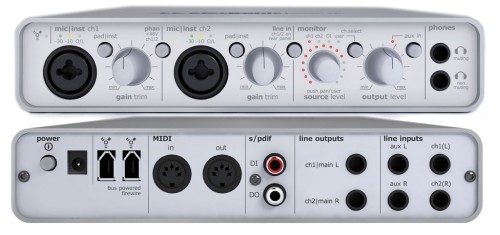
--oozz demonstrated for us his simple CAS. Using WAV file played on a small Firewire-enabled PC laptop via Foobar, fed into a lowly TC Electronics Konnekt 8 AD/DAC/Firewire interface (pictured). I personally think it's likely the best CAS I've heard yet. Given the very low cost of the DAC, I'd say give it a try if you have Firewire, or even if you don't (there's S/PDIF and optical too; no XLR). oozz said he had also briefly tried its AD section and the results on the few LPs he archived was encouraging. That's chock full of features for such a low cost thing!

--We marveled at the full metal jacket Gaggia Achille Espresso Machine. Unfortunately, it's not operational yet. Next time we visit, we demand espresso! I miss JC here.

After that, we all stopped by sokps' place. He generously let us break the seal on a 20+ year old bottle of Johnny Walker Red, which as you know is emphatically not the same thing as what passes for it now. Popular brands of scotch and brandy are now just ghosts of their former selves. Connoiseur of scotch oozz murmured to himself "tastes like single malt..." That just about said it all (though popular single malt is also not quite their former selves, but the downturn is not as severe). So, the older the better!

After that, we went for a very good dinner at the venerable 龍華 in 錦田. 燒鵝皮脆肉嫩,淡而有味; 小炒王沒多半點油,香口惹味; 炸生蚝酥脆, 肥而甜. Now, THAT is a rare good restaurant! Too bad no photos. After dessert, four fellows squeezed into my LR for an audition of my WAVAC system, for which I shall write a full report one of these days.

Happy Holidays to All!

Home Visits: Spendor SP-100 and DIY Fullrange

Home Visits: Spendor SP-100 and DIY Fullrange

Different ways, all money well spent

It's amazing to realize it has been exactly one and a half years since I started my Blog. The inaugural article was on Usher. The third article was a Spendor Overview and it's a delight to return to Spendor again here.

Click on pics to enlarge

Class A Bargain
A week ago I hooked up with icefox in 葵涌. After lunch at likely the busiest 茶餐厅 I have ever visited (where the waiters were literally running around) we spent some time listening to his SP-100. Previously, he was listening to the Maggie 3.5s. While he was awaiting servicing for the Maggies, icefox brought the Spendor SP-100s out and placed them in positions where they can be more advantageously heard. This just happened recently and so things have not settled down. At first sound was a little lugubrious and the bass was not too good. So we spent some time getting them into shape. Things have changed a bit from the previous visit. For this temporary setup:

-CAS: Mac mini + HD. iTunes/AIFF/mini Toslink into a set of recently acquired old DPA flagship (still not nearly as good as CDP playback).
-CDP, Preamp, Amp, speaker cables: Symphonic Line
-Speakers:Spendor SP100

-The first thing I noticed was that icefox in haste used a few strands of solid core copper (stripped from Pirelli power cables) threaded through the holes of the binding posts (SP-100 is Tri-wire) as jumpers. The cores are of rather high AWG (diameter) and he used many of them. Since my own experience is too many strands of solid core wires cannot be used in a cable without the risk of smearing the sound, we removed them and decreased the number of strands, using only 2 twisted together. Sound was immediately cleaner and bass became more agile.

-I noticed the single pair of speaker cables were inserted into the bass posts. I moved the (+) to the midrange post and left the (-) on the bass post. There was immediately more air. I don't always favor this kind of connection but it's system dependent.

-I know for a fact the SP-100, like most large speakers, respond to bi-wiring (few people would go to the extent of tri-wiring). In fact, IMHO this is a MUST for better control. I brought with me a set of twisted solid core jumpers (from salvaged old AQ cables) and hooked up the treble and midrange posts. icefox dug up some very long Gotham cables, 2 pairs of different construction and length (I think 50040 and 50150) and we installed them, the shorter pair on the bass units. the sound improved further, for me to an extent larger than the previous 2 maneuvers. Most importantly, sound was much more at ease, especially with classical showpieces. Bass smoothed out and, more importantly, now had a walking quality. Perhaps the cables had not been used for too long; sound was just a little slow for my taste, something that's not characteristic of Gotham.

-icefox finally remembered had had another pair of Symphonic Line speaker cables, loaned to him by oozz. Perfect! The two pairs were of identical length and the switch tightened up the sound a small notch.

-A very small degree of toe-in snapped images into better focus.

The speakers are really marvelous. They filled up the space in a way that the Maggie 3.5 could not begin to do. Sound is fast and smooth, dynamic as hell and responsive to all types of music. Properly set-up they put most super-expensive speakers of nowadays (unfortunately too many of them) to shame. Remember the SP-100 is an evergreen on Stereophile's Class A list. You should audition it.

In truth, I should mention that although SP-100 should be (tri) bi-wired for better control, this should not be taken as an indication that it's power-hungry. Just as importantly, the SP-100, like many good speakers (Maggie e.g.), does not need expensive amplification to sound its best. A good tube preamp and a cheap but resonably strong amp is already enough to bring you to nirvana.

Add a little here, a little there, all on the cheap
Then we visited neighborhood denizen welborne, another very old friend of mine. I was delighted to run into limage and Ken1967. It's a Monday, does any body work these days?

When I first knew Welborne in my Cheaptubeaudio days he was into tubes and all kinds of reasonably priced things, including fullrange speakers (Diatone), BBC monitors, SET amps etc. In recent years he has concentrated on T-amps and the like, but it seems his love for the fullrange has remained. His setup is, to say the least, most unusual. It's slightly different from when I last visited:

-Digital: Philips 963 into Promitheus (non-oversampling) DAC
-Amps: NuForce integrated for fullrange and tweeter; pre-out to electronic crossover to Virtue Audio T-amp for bass.
-Speakers: The calling card of the system. based on a (radio) SABA fullrange. I forgot the (super)tweeter. The bass is augmented by a huge professional Celestion unit. the "enclosure" is basically open-baffle.

welborne's has always managed good sound. The speakers are highly sensitive and likely present a benign loading curve (important for digital amps). The sound was layered and easy on the ears. I don't think even flea-powered T-amps would be taxed by the fullrange and tweeter. Compared to last time, sound was smoother but slightly lacking in fleshiness. Perhaps the crossover needs a little fine-tuning (I'm sure he's doing that all the time). Overall, however, the sound was quite musical. It's now from Cheaptubeaudio to CheapTaudio for welborne. Try to pay a visit and be amazed by what can be achieved for so little.

My view of T-amps in general
Texture always seems to be somewhat deficient; I think that's too much to ask from T-amps. Call me biased, T-amps and such likes always seem to me to have a one-dimensional and "papery" quality (for lack of a better word) in the sound. There can be a lot of it, or a little, but never completely absent. I'd not say "digital sound" because the better digitals (at least as source) sound satisfyingly fleshed out. And for a SE Triode man, harmonics and decay of T-amps are also not of the first rank. However, for the price and convenience (diminutive size) they are wonderful things.

20 December, 2009

HiFi Basics: What's the most important thing in HiFi?

HiFi Basics: What's the most important thing in HiFi? And, is there progress?

Technically, aside from the speakers, I'd regard what's at the front (source and preamp) more important than what follows. But really, the most important thing to Hifi comes from the heart. It's the love of music.

It perhaps matter not so much what genre of music one likes, as long as one is willing to explore and go in depth. There are people well versed in Rock & Roll, and Jazz, and as primarily a classical fan I admire and read what they write. Contrary to popular belief, it takes not much money to do this, but it takes effort. A case can be made that various free venues of exploring music, be it via the library or radio (easy these days because of the internet), or even the internet and youtube (sound limitation hardly detracts from greatness in music) is more fruitful than buying CDs on your own.

Unfortunately, most audiophiles spend way too much time listening to audiophile recordings and too little exploring music. Buying multiple versions (SACD, XRCD, LPCD, xxCD) of the same album just for the slight difference in sound effect can also be an overkill. While pursuing "higher fidelity" is inevitably part of the audiophile, when it comes to "progress" the subject is more complex than it seems. Every new technology has its own Archilles Heel, and it takes time to even just admit it.

Many years ago, long before the advent of R33 and imitators, mirroring elsewhere, in the HK forum Audioboard, there were lots of writing and debates on the "death" of CD, not to mention LP. The argument used the advent of DVD-A, SACD, as well as then-new "upsampling", 24/96 and even 24/192 on the horizon. Looking at it now, aided by the internet, while high-bit, high-sampling rate has finally raised their heads, DVD-A and SACD (let's not argue about their merits or de-merits) have largely fallen by the wayside, and many of the doomsayers have been proven wrong. The same people are again saying now the CD is dead, and downloading is the future. Are they right this time while proven wrong many times before? I think not.

These "experts" (and some of them are active still on the net) who predicted the death of LP and even CD could not have been more wrong. LP in the past decade experienced a strong resurgence. It's not just discerning hifi people who feel so, even "ordinary" music lovers think LP sound superior. If you think the contrary, read no further. As for the CD, it's interesting to note that out-of-print CDs now command increasingly stratospheric prices. Does that not remind you of LP?

Don't mistake me for someone who believes "the older the better". I follow CAS with great interest, and listen to CAS whenever I can. I use CAS as an alternate source, but since I've a hugh collection of software, it shall never be my main staple. For the classical fan, the "convenience" of CAS is over-rated. It's a pain to maintain and difficult to sort. Let's say you use iTunes and have registered for the store, cover Art for pop is easy and almost inevitable, but it almost never works for classical. Sometimes you even get the wrong album cover! OK, classical fans is a minority, but one undeniably of the greatest importance in HiFi.

Another truth is, there is nothing that is the "best". Such terms are only employed by magazines and the inexperienced. Can CAS completely trounce the best of the most primitive 14-bit (such as Philips 100, 2000 or revox 225) machines? Many think not, but you have to have the experience first. There are too many people out there making big statements, and many of them don't have substantial experience with older decoders, not to say LPs. For me, anyone who doesn't know LP well and make pronouncements on digital superiority is suspect. There were too many of that type in the earlier digital era. Then people began to find out about "jitter". Now, there is "pre-ringing". As the ordinary CD is getting better and better, problems with CAS is only starting to emerge. Download a high-resolution file and perfect sound forever? I wager not.

So far in my experience, CAS has not convincingly trounced even simple CD playback, not to say LP playback, but I'd be happy to be proven wrong. Most alarming are the hyperboles I've read. One example is the lavish praise of CAS through the Benchmark DAC. Yes, it's a reasonable DAC, but it's not what it's claimed. Even with the "best" cables and tweaks, it's seriously deficient in rhythm and pace, which means music has a canned quality.

CAS is certainly fun, and there are people older than I totally immersed in it. I think it's great for the industry and our hobby, and more than enough for the music lover. Which brings me back to the question of "progress". I do think there is progress in audio. Very good sound can be had for much less than before. That is certainly progress.

However, in terms of the unfortunately named "absolute sound", the answer is a resounding NO. In this day and age, why would someone listen to an astronomically priced Western Electric tube that outputs less than 0.5 watt? Why do people listen to hugh vintage horns? You can choose to deride these people, but I know and agree with their basic premise: notwithstanding measurements and "advances", these primitive devices are capable of getting one closer to "absolute sound" than the newest devices. If you don't think so, it may be your lost. Of course, not everyone gets good sound from these things from the "Jurassic Age", but some do. It's no different from CAS: it can be wonderful, or awful. It's all in the implementation, and that takes time and experience.

What happened to liner notes? Every time you take out a CD or LP, the liner notes are calling out for you. Maybe you don't read them, but you should. It's important to learn more about the music you're listening to. I read all the liner notes, even those that come with the library CDs. With only CAS, you need to turn on the computer to find out, and that's not too good for your musical growth. The bottom line is, explore music more than you explore technology. Only in that way can you become a better audiophile.