17 May, 2020

Musicians as Audiophiles (a la Stereophile)


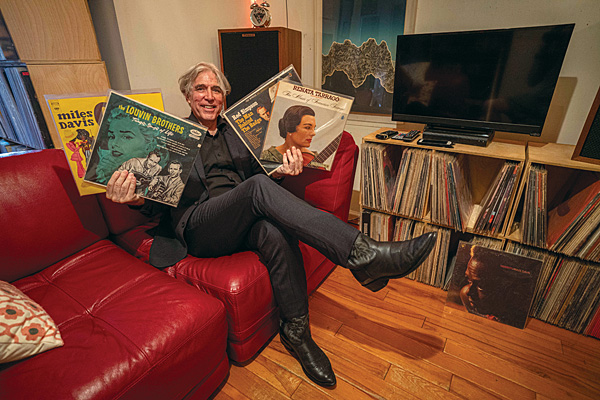
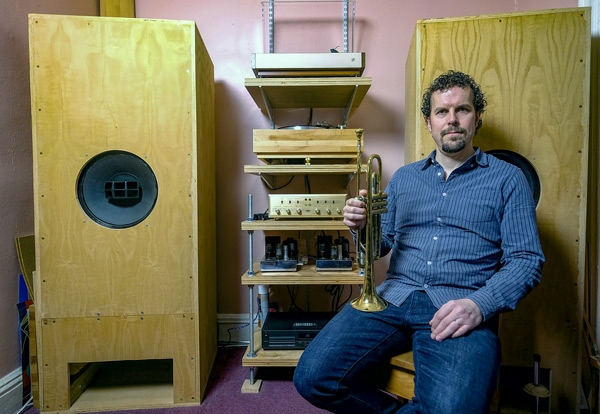
Click to enlarge. David Smith, Pic from Stereophile.

New York Diary (20-20): Musicians as Audiophiles (a la Stereophile)

Addendum 5/18/20: I didn't even know it when I wrote this. Apparently Ken Micallef has all of these on youtube! Just type in his name. That's many sleepless nights!

After I posted the last Diary entry (20-19; right below this one) my colleague mrgoodsound alerted me of more in this series. Although I have been a long-time Stereophile print edition subscriber, I actually never perused their website much. I only go through the email newsletters (limited links), and I focus on vintage reviews (like those by the pioneering J Gordon Holt) that they are gradually posting (great for them, with a sense of history; contrast that with TAS). Suffice to say, I am apparently missing quite a bit of musically related posts. Among these is Ken Micallef's series, Musicians as Audiophiles. In one long day I avidly soaked up the whole series. As mrgoodsound said, it is indeed a great series, and I urge you to read them all and sincerely hope they will find more musicians to report on.

It is well known that a lot of musicians don't get into audio (and KM poses this question in every interview). I know first hand! Many years ago I had a pianist girlfriend who was skeptical of my audio  setup (my Dahlquist DQ-10 period; here). She paid attention to the music. e.g I still remember while she was listening to a Furtwangler mono recording of Beethoven's Pastoral Symphony, she remarked, "Listen to that! What beautiful phrasing!" On the other hand, on my advice her composer colleague bought a friend's Quicksilver 8417 monoblocks - so responses vary. One exception is guitarists, who may not be into audio per se, but every accomplished player is into tone and tube rolling, because the best guitar amps are still vintage tubed ones. In fact, a lot of the tube rolling comments on the net are based on guitar amps, not home audio!

What I am doing in this article is: 1) provide a link to each so you don't have to search. That is 11 Home Visits there! 2) comment on the equipment (or setup) because I can relate to much of it.

The Musicians mostly chose well (because they have ears!)
These are all accomplished musicians, the most famous of which is Ron Carter. They all know and influence each other, but vary greatly in their audio immersion (one is nearly as crazy as I) and budget. Paradoxically and true to my Cheaptubeaudio Roots, the ones that interest me the most are those with limited budget or space. In most cases I think for their budget they have done very well, and can serve as examples for many an audiophile, especially beginners. There is a lot they share: preference for turntables and some tubes, even vintage; attention to neutrality, presence and an open sound. But what is most remarkable (but not surprising) to me is the language they use to describe their systems and goals, all related to the actual sounds of instruments and the live event. You are not going to find much use of jargon's like "soundstage" or "imaging". The talks read like Art Dudley (a musician too), but more direct and less philosophical. I'll start with the ones that interest me the most. As our young old soul mrgoodsound commented, David Smith was the most interesting one to us vintage aficionados.

David Smith
Altec 604E (20 cu ft cabinets) First, it is absolutely correct that the larger the cabinet or the space the better, but that is out of the question for most people. It is AMAZING to see that cabinet in this small space! One can see impact is very important to him. Most of us can only live with smaller cabinets. I have heard many 604's (all iterations) and some of what I think about the 604's and Altec in general can be found in 2 of my Home visits: this 604D and this 604H. Even with 20 cu ft the bass is lean (and they are room and wall augmented), as I'd expect. Personally I'd add a subwooferTransmission Line I am not the only one who harbors some reservations about TL. Many years ago, in a HK forum, there was a thread on the merits or lack of of TL. I didn't weigh in, but all that vitriol was amazing! Outside of DIY efforts, the most famous loudspeaker manufacturers that use TL in some of their products are vintage IMF and current PMC. I have heard quite a bit of both in HK. IMF can sound pretty good but like a lot of vintage loudspeakers (e.g. the infinite baffle KEF 104AB) their slower transients bother me. As for PMC, a couple of times I did find the bass of their tower TL designs suspect (one-note). I understand MLTL, which many view as similar to simple ported enclosures, is popular with Altec DIY'ers. Rek-O-Kut TT That is a beauty! Even though I used to have Garrard 301's and now still use Thorens TD-125, I'd not mind owning one of that idler wheel model! Denon 103R/102 What can I say! Anyone who appreciates Denon cartridges is a fellow traveler! Scott 130 I still have a unit in HK! Perhaps my unit was not in the best of shape. I found it a bit too warm and preferred my Scott LC-21, a less lauded and less complicated model, which has its own adherents. Radiocraftsman RC-2 Regular readers know my enthusiasm for the 6V6 tube, which I prefer to all later pentode/tetrode/beam tubes. The RC-2 is one of the most overbuilt and iconic and I have heard it in HK as well as in NYC recently. Somehow, Sid Smith notwithstanding, I think it (and the C-400) may not be the best sounding one. I may actually prefer the sound of the smaller transformers (usually quicker and lighter sound) found on cheaper units . But it is great to see a musician using this tube! Dad's System That must have been something, the legendary Dahlquist DQ-10 which I used to own (my Dahlquist DQ-10 period here); how I wish I had then a muscle amp like his dad's Bryston! His Earlier Acquisitions Quite a bit of the stuff he had used are great stuff. First Loudspeakers, the man obviously has long been into efficient loudspeakers, like the Lowther PM6A, which, great as it is, would not give a Jazz man his oomph. Klipsch Heresy again too! And then The French 3A, precursor to the current Canadian Reference 3A. The history of the 3A company is quite convoluted. Being a long-time devotee of fullrange and first-order loudspeakers (my views here), I have fond memories of their affordable 2003 first generation MM de Capo loudspeakers (first-order) which I bought used in HK. It had a sloping baffle (time-aligned) and was superbly musical and dynamic for its size (though not small). It worked well with my SET amps. I sold it because, again, it lacked a little transient speed (never tried with ss amps). Researching for this article, I was surprised by an Art Dudley review that I never read. For more crazy history of this company, read ufhmag, and this unusal frenchvintagehifi site features a lot of the company's even earlier products. And then we come to the preamps. First, the Marantz 7T, the solid state version of the iconic 7C. I have never found it that good, but the Eico HF-85 is another story. It was one of my first vintage forays. My unit had a sound that was overly warm but vocals were mesmerizing and it came with all Mullard tubes. At that time I was using Russian tubes and soon found the old-stock tubes to be superior - the rest is history. In HK, my friend rcwy is an Eico freak and mans a Yahoo group. He restored many of these and was always showcasing this preamp.

John Escreet
Fisher 500C What first rocked his boat was hearing his musician friend's Fisher 500C driving the LS3/5A, thinking it was realistic, and this from a musician! Of course, I cannot agree more! Any good tube amp driving the LS3/5A is bound to be a satisfying experience. As I type I am streaming NML to my 15 ohm Chartwell's (Artemis LA-1 tube preamp and Akitika GT-102 power amp). Fabulous sound! A note on the Fisher 500C. This is THE most iconic Receiver for a good reason: Fisher makes great amps and tuners! And personally I think the 7591 is a GREAT output tube (maybe that's the reason why, with McIntosh amps, many consider MC-225 the best sounding). I should restore mine, which was given to me (one output tube glows red). Vandersteen This is just the first time this Loudspeaker name will appear in this series. The iconic original Model 2 was released in 1977 (here) and the model has been in continuous refinement and production since then. The 1's and 2's are bargains. Like Dahlquist and Alon, a Vandersteen only has a woofer enclosure, the midrange and tweeter being baffle-less. They are also time-aligned. If not for the Plain Jane look, they deserve to be more popular!

Jerome Sabbagh
In Room Placement The thing that struck me the most is that the system is set up for Near Field Listening. In my opinion, in a small space that certainly is the best thing to do. In fact, even with larger rooms and larger loudspeakers, if family situation permits, in-room is frequently much better sounding due to less room problems (as witnessed here). JR149 I am surprised this loudspeaker made its appearance. Every LS3/5A aficionado knows it and considers it a "variant". I used to own a pair. I have to say I prefer the more sassy sounding LS3/5A, though the somewhat larger JR149 can likely play louder. Fisher X-100 v3 This is another Fisher classic that uses the 7189, a ruggedized version of one of my favorite tubes, the EL84/6BQ5 to yield more power. The disadvantage is, due to the higher dissipation, other EL84/6BQ5 tubes cannot be reliably used and 7189's are rarer and significantly more expensive. Garrard 401 needs no introduction, classic idler wheel. Harmon Kardon Citation II Wow, that's a legendary amp! It makes me livid that many of these were poached for their transformers by various DIY and small manufacturers. Shame on them! I still have a beat-up stock amp in HK. It sounds great! The Jim Mcshane mod he mentions lowers the dissipation to be kinder on tubes. Previous Acquisitions In my opinion, the Quad 303 is a cheap and excellent amp and can certainly drive his JR149 very well. The problem is the Quad 34 preamp; stock it is low gain and not a lively sounding unit, good only for amps with very high input sensitivity.

Chris Lightgap
KLH 17/23 I don't know these per se, but my experience with these vintage large boxes from KLH and AR have been positive. No WAF and clumsy and heavy, but these musicians like them. I remember after I moved out of my Manhattan apartment and sold my DQ-10's I had no loudspeakers. After my father passed away I moved in with my mother and began to buy vintage stuff (yes, that Eico HF-85, which I took to and late sold in HK). Someone gave me a pair of AR's, not any of the famous models, which I had against the wall on a cabinet. One day, a jaded audiophile came to listen, and I used my McIntosh C-22 and Marantz 8B and played the BBC audiophile LP Flight of the Condor. He was shocked by the quality of the sound. Funny thing was, he had just sold his C-22 and soon after, thinking he had undervalued it, he bought another one. Crazy? Thorens 160 This is a great looking and sounding turntable, but I like even more its earlier sibling TD-150, which I used to own, because of the friendlier design of the armboard. The tonearms on these are limiting factors. I compared my TD-150 then to the LP12 (both had the SME 3009) and ditched the latter. This musician preferred the Grado Prestige Green to the Rega Bias. I'd completely agree with that. Mind you, when I restarted vinyl playing in HK, I had a Rega 3 with the Bias on it. I never heard any thing special from that cartridge (and a later Elys). I still have the much more expensive Grado Gold, which I consider an excellent entry level cartridge, and the Green is the same cartridge with probably a little less tolerance. Dynaco FM3 This is a sleeper. It is minimalist and does not have a classic display, and some worry about the cat eye tube. But it is excellent sounding. I should take mine out and run it! Fisher KX-100 Another less touted but excellent Fisher amp! It uses the 7868, which is electrically the same as 7591 but has different pinout and base (smaller noval vs larger octal) but these days you can probably find Chinese -made adaptors for very little from Ebay. Finally, another one whose dad had a pair of Dahlquist DQ-10's!

Jed Levy
Proac 2.5 This was produced during Proac's Golden Age. They were best selling, and in HK, for a long time you could always find a few pairs of these in second-hand shops. They are almost always reasonably good sounding on home visits. However, personally, I prefer their reference line, the original Response series (I have owned the 1, with outboard crossover; and 2; and heard the stunning 5, with its d'Appolito arrays), which in my opinion are significantly better than their later iterations. Spendor SP1 (original stands) I used to have these, which I prefer to their more famous predecessor BC-1. Too me, the SP-1 has the faster transient and cleaner bass. They are really good with 300B amps too! Rel Strata III Subwoofer I probably would prefer the SP1 + sub to the Proac 2.5's! Ariston RD11S Of course this turntable is much better than the Music Hall and the Dynavector 10x is the better cartridge too! Rogue Magnum Amp This name also comes up more than once. With good reason. I have heard their older upper echelon products and they were reasonably good sounding traditional tube amps. Like Prima Luna, a fair choice for newbies or people on a budget.

Adam Rogers
In Room Another example of the virtues of in-room placement. B&W CM5 Our friend Kevin still has  a pair and it sounds good there. I have also played with the slightly smaller CM1 (here). The CM series is one of B&W's best. Why? Because they are another example of First Order Crossover! Totem This is Totem's entry level and I am not so sure about it. I have heard quite a few models and did not find them to my taste. Except one. The original Model 1, which puts them on the map, is great (but needs power). AR XA An excellent turntable for sure. My friend Andy jokingly said it is the watchdog in his house: any newcomer has to beat it to earn its keep. Rogue Sphinx Another Rogue! I actually would like to hear this amp because it is a hybrid (I love my Counterpoint SA-12), which I am not adverse to and I suspect I may like it more than the all-tubed ones (no offense, no matter how good, modern tube amps don't measure up to vintage). Yamaha NS-10M One of the most iconic mini-monitors, so famous as to have a dedicated namesake website. I miss my pair (here), as well as the NS-1000M!

Paul Wells
Vandersteen 1C Yet another Vanderstein! It is interesting he used his ears and determined the 2's are not as suitable for him. Usually audiophiles try their best to overreach and sabotage themselves! :)

Billy Drummond
Now, that's a real audiophile! SO much equipment and so many systems! Just a few of what interests me. Magnepan 1.6 The excellence of Magnepan needs no introduction. Heard many of these in HK and I own in NYC the 1.7 (here), which I am thinking of dragging out recently. California Audio Labs Sigma II Tube DAC Despite its Delta-Sigma credentials, this is a very musical DAC and still commands a good price on the market. Micromega MyDac One of my favorites, and being used right now as I stream music! A great bargain these days! Vandersteen 3A and 2CE 2  pairs! ARC preamp and Bryston amp I have used before and it is a good combo. Technics Turntables Of course I am a Technics Direct-Drive Fan, but I don't understand why the GREAT SP-10 is languishing in the dining room when the 1200 is used often? Glass Toslink This got me curious. I won't buy one, but I'd love to hear a comparison between plastic and glass!

Dan Weiss
In Room This is a very basic system which I am sure sounds pretty good. Rega (I liked my first generation Brio but the power was limited) and Spendor cannot go wrong. But look! The way he has his loudspeakers in room, and there is so much room behind the loudspeakers. Imaging will be very good and the sound would be airy. Sennheiser HD-600 Great choice and among the best. I brought over my pair from HK. My HK friend BenYC swears by it and I think my colleague mrgoodsound likes it too! Reader's Comment Under this article, a reader said, "...It is encouraging that professional musicians in these articles seem to get by with good, reliable, but by no means exorbitantly priced audio equipment. And let's remember one thing, technicalities aside about whether these great musicians are "audiophiles" or not: they have a keener ear than most of us as they make their living off of producing the real thing. With each successive article in this series I gain a growing sense that my audio equipment is good enough, and that I should focus my limited budget on good recordings, perhaps of the very figures covered in these articles..." Well said, and indeed! Applause!

Ron Carter
This is a relatively sparse and "simple" system, but I am kind of surprised by the loudspeakers. Tetra Loudspeakers are unknown to me. Here, Carter has more to say about them. But then after researching I know why. The 606's are what Carter's colleague, the great Pianist Herbie Hancock, uses and promotes (here). They are 33K in list price!!! But, aside from a AMT (prevalent these days), I really don't see why that is so different conceptually from Dahlquist, Alon, Vandersteen. Hmm...I do think of one thing. With AMT or ribbon tweeters, due to our intrinsic ability to equalize, paradoxically the bass would be very clean, good for both bass and piano. We experienced HK audiophiles say, a super-tweeter is to tighten the bass, and a subwoofer will make the treble better! That is a half-truth, but it is true! But I think equally good results can be gotten for much less. Get a decent loudspeaker, and dial in a bit (never too much) subwoofer and super-tweeter to see what you get. After all, it is no big secret, and that's what these speaker designers are doing. But, YOU can do it for way less. Ribbons tweeters today are cheap (and good), and the same for subwoofers.

John Hebert
Vandersteen 2Ci Another! Very humble stuff but I believe they would sound good together. I am particularly interested in the very solidly built Sony Turntable. What I am saying is that a LOT of vintage TTs are very good. You don't need a much vaunted gear (like Garrad 301, Thorens 124 etc) to have musical satisfaction. As an example, my Pioneer PL-10, my first TT, still entices me!

I am not sure that is all there is, but that's the result of my search.

Observations
  • The Musician Cohort Obviously, these (jazz and pop) musicians all know and influence and help each other. So there is a tremendous overlap in equipment. But audiophiles would do well to examine the factors that influence these musicians, all deeply attuned to what real music sounds like, to subscribe to certain ways. Also, I have to point out, most of them are not classical music listeners and do not crave the lowest octaves (otherwise we'll see more subs".
  • Catholic Tastes and The Box For the most part, these musicians do not tolerate complicated stuff. Do you see any of them using super-hi-tech Computer Audio? No. When it comes to Loudspeakers, it cannot be clearer: 1) They prefer less electronic components in the signal path.  Their loudspeakers are overwhelmingly higher efficiency or have simple crossovers (first order, like 3A, B&W and Vandersteen's) ; 2) They prefer a boxless sound, as exemplified by the numerous baffle-less Vandersteen's or Magneplanar, and the Tetra; 3) when it comes to more complicated crossovers, the BBC influence is apparent (LS3/5A, JR149, Spendors's). Note the absence of modern stuff.
  • Turntables There is a huge age gap between them, but down to the last one, they ALL love to play vinyl. And ALL think vinyl sounds better. Quite a few of them may benefit from TT upgrades! Lower end Rega and Music Hall, and VPI's can all be bettered by a solid vintage TT in good shape.
  • Tubes Tubes are preferred somewhere along the way! Of course! We know that!
  • Vintage Vintage equipment is respected and loved and preferred by these musicians. That is a TALL indictment of modern hifi, and I cannot agree more. I particularly love all the Fisher integrated amps! Before I left HK, I sold my treasured Fisher X-101-C to a friend and he just wallows in it with his LS3/5A's. Also, my yumcha friend KC has a triode-modified Fisher 101 (EL84) which is superb (here).
  • Placement To me, the musicians mostly intelligently made use of their space. Those with larger speakers place them against the wall (no detriment, but bringing them forth can still be beneficial), but those with small monitors mostly use in-room settings. Exactly as it should be.
  • Impact of this Series I just love that readers comment (under Dan Weiss)! What that reader said is very important, because a lot of audiophiles have been led by all the industry talks and hyperbole's into endless upgrade "paths", paying undue attention to Levels (1, 2, 3, etc), Class (A, B, C), instead of saying "Good Enough" (which I champion). The musicians mostly display the kind of sense often lacking in reviewers, and perusing what they use is a lot more fun than perusing the magazines. The "higher" the end, the more boring the review, don't you think?
What a great series, and I hope that it will continue! Again, thanks to my colleague mrgoodsound for alerting me to this great series!

13 May, 2020

Another Klipsch Heresy System

520campilongo.withlps
Click to enlarge. Note the Heresy against the wall.

NY Diary (20-19): Another Klipsch Heresy System

I read this article in the print edition quite a while ago, and was just waiting for Stereophile to upload it, so as I can share it with you. This master guitarist uses in his home a MacIntosh preamp driving a Dynaco ST-70 amp for his ancient Klipsch Heresey loudspeakers (link here). Make sure you read every page, but it is surprisingly missing one photo of his right loudspeaker that is in the print edition. Never mind! For myself, I'd never do without a sub in this system, but, you should notice his room is not that big, and at least his left speaker has wall reinforcement. And his "rack" resonances should help further the sound. One should always make things work for you, rather than against you. I think, without knowing, his musician self accomplished it for him! :-)

11 May, 2020

Amp Builder Spotlight: Lance Cochrane, Oliver Sayes, Radu Tarta

By mrgoodsound


Time for some cheap tube audio! I would like to share about some independent amplifier builders I have worked with in the past. Although 'cheap' is subjective, the builders I discuss here put out amplifiers that could be considered affordable by most!

I have little to no interest in commercial or mass manufactured tube electronics (this does not apply to vintage electronics). This is because even if you cannot DIY (my skills are limited) or have no interest in building electronics yourself, there are a number of talented craftsmen in the audio community who put out products that out perform anything from the brand names.

Working with an amplifier builder has its pros:
  • Great deal of flexibility and customization, you may get a unit specifically tailored to your system, speakers or taste. This includes aesthetic and functional considerations too. 
  • Free from overhead manufacturing, marketing and distribution costs; the hobbyist or semi-pro builder may pass those savings onto the consumer when he or she buys direct. 
  • Potential for higher performance. Most brand names are re-hashing the same 3-4 circuits for a given power rating, with minor differences in parts quality. This assures a certain 'safe' performance and sales. The hobbyist or semi-pro has more freedom to explore designs and think outside of the box
And some cons:
  • Limited opportunity to demo their wares beforehand. Usually a purchase decision must be made based on direct conversation and the recommendations of others, which is not an ideal position, especially for a big purchase.
  • Limited resale value. You can only sell to someone who is familiar with the builder's work, and even then at a rather steep discount to what you paid, considering additional costs for customization the potential buyer may not care for
  • Potential for lower performance. Freedom of design means that you may end up paying big bucks for someone else's prototype or design that seemed good on paper but did not sound well on execution. 
  • Potential to go 'overboard'. Given the opportunity to specify what they would like in their amplifier, it turns out that most audiophiles don't have a clue; and are usually too focused on the tubes and parts used, or making their dream amplifier that is not really the right fit for their system. The conversation usually goes something like this:
Prospective customer: "Hello, I saw on your website that you build custom amplifiers. I have always wanted to try a 45 amplifier. I listen to loud rock music with 92db/w efficient speakers. Please help!"
Amp builder: "Yes, I can build you an amplifier, but have you considered a simple 6L6 push-pull circuit for your speakers instead? A single-ended 45 amplifier may not satisfy your listening requirements. I can build a number of push-pull amps with good sounding iron from Hammond or One Electron. Check out my projects page and let me know what you think."
Inside the Sun 2A3 clone - so neat!
Prospective customer: "No, push-pull doesn't sound good, I don't have any experience with it myself but the people on forums say so. I want a single-ended 45 amp. I heard one at my friend's house and now I have to have one. BTW can you source Tribute transformers for me with nano-crystalline cores? And please only use Mundorf film capacitors in the power supply."
Amp builder: *facepalm*

Oliver Sayes

Oliver Sayes aka sonic_oli is based in New York and is really talented! His main offering seems to be Yamamoto/Korneff 45 clones using old stock Tamradio output transformers. It's really amazing that in this day and age one can get such a high quality single-ended amplifier for under $1000 USD from a talented builder. I always see his 'plain jane' amps sell in under a week when listed, though I know he is open to custom orders and I have seen some crazy two-chassis creations from him.

I owned a simple Sun Audio 2A3 clone he did with bargain basement parts - Hammond OPTs, Russian PIO caps and an ALPs pot. Nothing fancy, but it sounded sweet! I would like to try one of his amps based on the 45, 46 or 42 tubes sometime.

Radu Tarta

Radu is based in Connecticut can be found on his blog simplepleasuretubeamps. I would consider him a 'modern' amp builder - he uses very fine modern OPTs, DC heating, filament regulation and overbuilt external power supplies for his amps. As a result his creations are a little more elaborate and definitely not 'cheap', but seriously beautiful.

Radu Tarta 4P1L line stage
I owned a line stage from him using the Russian 4P1L direct-heated pentode, triode-connected and plate loaded into a Lundahl line transformer. It sounded really good, competitive in terms of neutrality and rightness of tone with The Truth line stage, with some 'direct-heating' and transformer flavor. In the end, I sold it on because it did not have remote volume adjustment, which was more important to me.

Lance Cochrane

The next builder I would like to highlight is Lance Cochrane from California. Lance has been building 'scratch amps' for several years and selling his one-off creations on Audiogon. He no longer takes custom/individual orders but if you are lucky you may find one of his amplifiers floating around for sale. They usually go quickly. 
I like the scrappy style of Lance's creations. He reuses the chassis' and transformers from old console, organ and jukebox amplifiers; cleans out the inside and puts in a variation of his favorite circuit he has been working with for years. I have seen his amps feature 6L6, 6V6, 6550, 6BQ5, 6AQ5 and more, typically in a push-pull configuration for somewhere between 10-30 watts.

I currently own an amp of his called the 'Leviathan' which I think is rebuilt on a Conn organ amplifier chassis. It is 6550-based and features a whopping 11 tubes, 3 of which are rectifiers! When I was young and naive, as opposed to now where I am just young, I was anti push-pull for no rational reason. Yes, in general, they sound a little more restrained and a little less free than their single-ended counterparts, but I do not feel this way about Lance's amp. It is capable of sounding psychedelic and graceful, despite having enough current on tap to drive just about any conventional loudspeaker. The best part is that Lance builds for trouble-free operation, automatic bias on everything, no adjustments to make, output tubes run softly.

Finally, I will share an excerpt of an email from Lance where he describes the signature of his amps:

"What makes the power number? The higher the plate voltage, the higher the power. KT88/6550 for instance will be run at 600v on the plates commonly while 6V6 can't take over say 325. That's a starting point. How much the output tubes take and what you give them are separate things.
I tend to not give output tubes anywhere near their maximum ratings. The harder you run them, the harder the sound and the sooner that they wear out. All in the pursuit of more watts.
Looking a little deeper, the voltage difference between the plates and screens determines the class the unit runs in. If you have a big difference in voltage there, like Audio Research tends to do, you get more power. As always, more power comes at a cost.
I like to run the plates and screens with some difference, say 50 volts, but not a lot. That cuts effective power but adds depth. Having the plates and screens at the same voltage would give Class A operation. I've always found that on the bland side.
Mode of operation gives an amp a signature. Voltage on the first tube in the chain gives an amp a signature. Triode versus tetrode versus ultralinear gives an amp a signature. Biasing level gives an amp a signature.
My amps are all tetrode, all run at a soft level of plate voltage, all run at a discrete level of voltage on the first tube in the chain, and all are biased at roughly the same level on the tube curve.
They also are all cathode biased, have low global feedback, and have the same phase inverter.
There are a number of reasons my amps all sound more alike than different. It's all in optimizing the various factors of each unit so that everything falls into the same picture."

Lance Cochrane 6550 'Leviathan'
Conclusion - So, here is my advice if you want to pursue a custom amp. Find an experienced builder who has a portfolio building the type of amplifier you want, discuss your system with them, get their recommendations, provide a budget for the construction, and let them do the rest. If you are scared, wait for one of their creations to come up used at a reasonable price and try that first before commissioning something. The most important thing is that final product satisfies, and no amount of obsession, changing your mind or investing in more boutique audiophile-approved parts will guarantee that. Trust your builder!

10 May, 2020

May 10th Transcontinental Railroad Anniversary and the Chinese who Built It

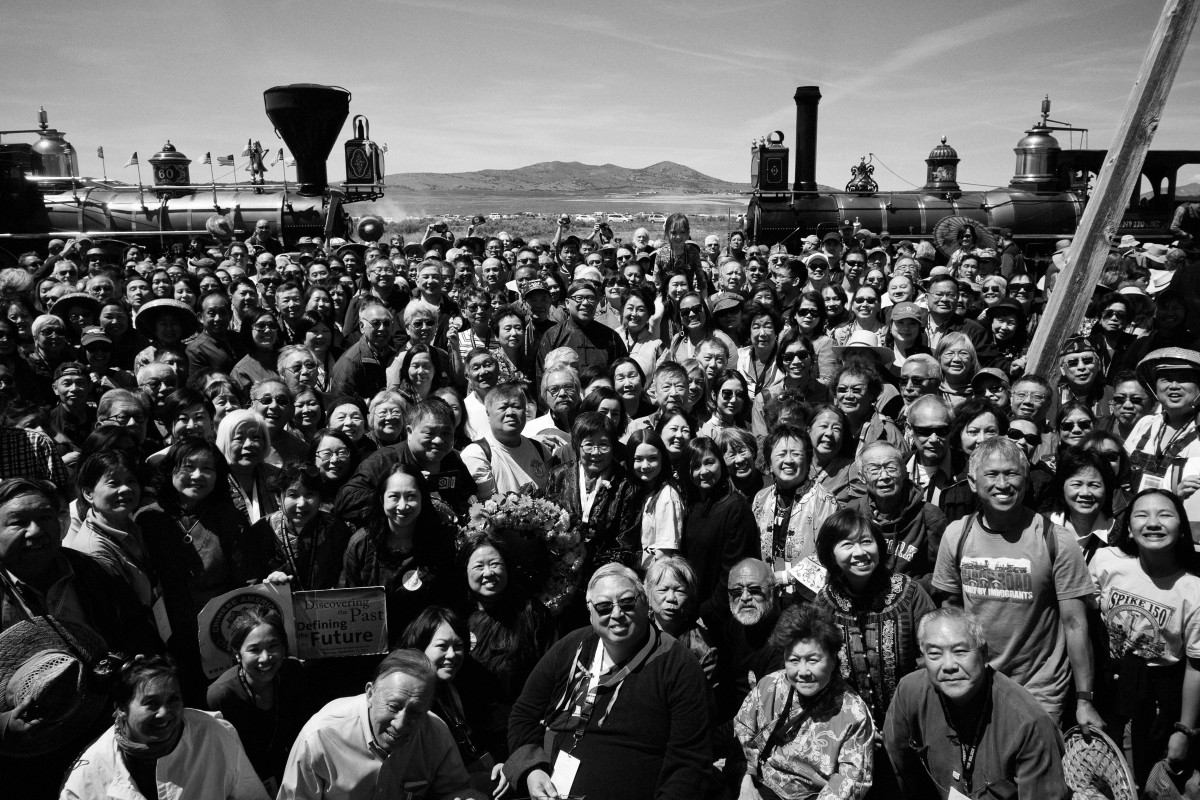
New York photographer and activist Corky Lee’s 2019 reenactment of the iconic 1869 photograph, but with the descendants of Chinese railroad workers and other Chinese-Americans. Photo: Alan Chin

Click to Enlarge. New York photographer and activist Corky Lee’s 2019 reenactment of the iconic 1869 photograph, but with the descendants of Chinese railroad workers and other Chinese-Americans. Photo: Alan Chin

New York Diary (20-18): May 10th, Today in History
To the Chinese who Built America's Transcontinental Railroad

Addendum 1: After I wrote this article, I as usual watched my favorite old TV show Cold Case. What do you know, today's episode was about a Japanese American family who endured Internment from 1942-43 (an eternal stain on FDR's Laurels). The son enlisted and died for his country. That resonates with me as the Asian American Soldiers, like their Black counterparts, were known for their discipline and bravery during the war, when their country blatantly discriminated against them.

Addendum 2: Tomorrow, May 11th, at 8 pm, Public Television is airing the first 2 hours of the new 5-hour documentary Asian Americans (all Asians). On May 12th, at 8 pm, the next 3 hours will be aired. I sure will be watching. Perhaps you can join.

Today happens to be Mother's Day, but May 10th is a much more important date than that. May 10th, 1869, was the day America's first Transcontinental Railroad was finished, ushering in a whole new era for the country. Today is the 151st Anniversary. Today is a good time to remember the despicable injustices the US government inflicted on the early Chinese workers, and the bigotry Chinese Americans today still face, especially in these times of the trade war and coronavirus. Even on the supposedly equal-for-all platforms of Equity and Social Justice, played out in politics and in school education, the Chinese are marginalized, even ignored.

The Chinese who worked on the Railroads were actively recruited by the US government, because the Americans did not want the hard work. Most of them were recruited from Canton (now Guangzhou province), China, around the same time Cuba recruited for their sugar plantations (see my related article on the Cuban Chinese). Around a thousand died during the building. Not long after the Railroad was finished, the US in 1882 passed the Chinese Exclusion Act, which was not repealed until 61 years later, in 1943, when China had become an ally of the US against Japan in World War II, as the US needed to embody an image of fairness and justice.

Not even one Chinese face is to be found in the iconic 1869 photo. The top is the 2019 reenactment photo on the 150th Anniversary, in the excellent report by Hong Kong's SCMP (you will find the 1869
original too; I cannot bear to look at it). Here's is another report from Reuters. More below on the featured Chinese American Historians:
Voices from the Railroad: Stories by descendants of Chinese Railroad Workers Co-edited by Sue Lee and Connie Young Yu, the full-length book features first-hand narratives by descendants of Chinese workers who built US Transcontinental Railroad
The Transcontinental Railroad was the work of giants. The building of 15 tunnels in the Sierra Nevada, the towing of locomotives and rails for 28 miles over the summit, the laying of ten miles of track in one day. The courage and daring of the Chinese in doing the impossible has been omitted from American history. Setting the record straight has been the driving force of the Chinese Historical Society of America (CHSA) since its founding. In 1969, the Chinese Historical Society of America initiated an effort to obtain recognition for the Chinese who helped to build the first Transcontinental Railroad at its 100th anniversary celebration. The plan was to produce and install commemorative plaques at the two ends of the Central Pacific Railroad—in Sacramento and Promontory Summit. The Centennial Committee invited Phil Choy as President of CHSA to speak at the May 10th 1969 ceremony at Promontory.
“What happened instead was a monumental snub,” says Lee. “Phil was removed at the last minute from the main program due to a special guest appearance by John Wayne.  To add insult to injury, the keynote speaker, U.S. Department of Transportation Secretary John Volpe’s asked, ‘Who else but Americans could chisel through miles of solid granite? Who else but Americans could have laid 10 miles of track . . . ‘ His backhanded acknowledgement of key construction milestones insulted the very Chinese laborers who performed these amazing feats. Chinese immigrants, specifically laborers, were unwanted—they were discriminated against and eventually prohibited from becoming citizens by the Chinese Exclusion Act.”
So, in 1969, at the 100th Anniversary celebration, the Chinese Americans were denied a voice. It took another 50 years, in 2019, just last year, for the Chinese' contributions to be at least mentioned. Equity and Social Justice for Chinese Americans? I am afraid not.

Basic Repertoire
There are some music depicting trains. In a previous post I showed the youtube of Steven Reich's depiction of a train to Auschwitz in his Different Trains.

The most famous classical work is train-enthusiast Arthur Honegger's Pacific 231.

For audiophiles, there is the "choo-choo" coal train in Hugh Masekela's Stimela, from his album Hope, which depicts the plight of African Miners. The lyrics are self explanatory in this live performance.

And then there is the actual train sound in the famous Decca LP of A Journey into Stereosound, which opens with a train scuttling from one side to the other.


08 May, 2020

Historic Radio and TV Themes NYC Radio Stations WNCN WNYC WQXR

Radio City Music Hall Panorama.jpg
Click Pics to Enlarge.

New York Diary (20-17): WNCN, WNYC, WQXR, Radio Days, Radio and TV Classical Themes

New York City has a glorious Radio (Broadcasting) History. The pictured Radio City Music Hall though was not part of it. It was so named because it is part of the Rockefeller Center, and its neighbor is the even more glorious RCA Building, now occupied by affiliate NBC. Yes, RCA was our estimable tube manufacturer who diversified badly into all sorts of failing ventures, part of parent company GE's incompetence (which extends into today!) RCA's history is fascinating and interwoven with audio of course (good wiki read).

THIS WEEK'S RADIO CONCERTS - The New York TimesI learned Classical Music by Listening to the Radio on my first system. At that time, the newspapers as well as magazines have the radio schedules for the classical stations (left pic is the NYT), so I could prepare in advance for taping. I chronicled my journey here, (hard to imagine that was written 10 years ago), the relevant section excerpted below.

With the first money I earned as a busboy in NYC, I bought my first stereo system in 1973. A cheap Harman Kardon receiver, horrible speakers, and a cheap Akai cassette deck, no TT. It was rather out of the blue. I never had any classical music experience in my Beijing Opera-suffused childhood, but listening to NYC's wonderful radio stations made me a convert very fast (the defunct WNCN, the perennial WNYCWQXR; make sure you listen to them, now easily via the internet, wherever you are; I still do!). Lacking money to buy records I just taped the broadcasts. It was a fruitful period. Imagine, discovering for the first time Sibelius' Violin Concerto (still a personal favorite) and Tchaikovsky's violent 4th Symphony (which I have OD'ed on). One year later, when I got more money I bought the Pioneer PL-10 turntable (I still remember the excitement as I lugged it out of the downtown J&R) and started buying records. At the time, Dual and other more expensive TTs were out of budget for me. This TT, which is still with me, therefore holds a special place in my heart.

WQXR: The Home of High Fidelity | NYPR Archives & Preservation | WNYCEverybody knows surgeons listen to music in the OR, but few know that many Pathologists do so when they look at the microscope. Radio was a constant in my office through the eighties. Remember, this was long before the days of portable and personal audio, before computer even.

WNYC (always 93.9) This is NYC's Public Radio, affiliated with NPR. It is now almost all talk (they are good), but at that time had a lot more classical music. It was, and is, always in financial crisis, and listeners have to often go through fund-raisers. One great thing about this station is that they have ticket giveaways. Now it is is an electronic shuffle but during my times we had to call in. The announcer would say something like "...the fifth caller would get a pair of tickets..." At first, I got really lucky and hit the jackpot several times. I remember them! Performances at the BAM (Pina Bausch x 2; Anne Teresa de Keersmaeker/Rosas) and even a CD set of Lully's Atys (Les Arts Florissant/William Christie). Then my luck went out, and soon I left for Hong Kong.

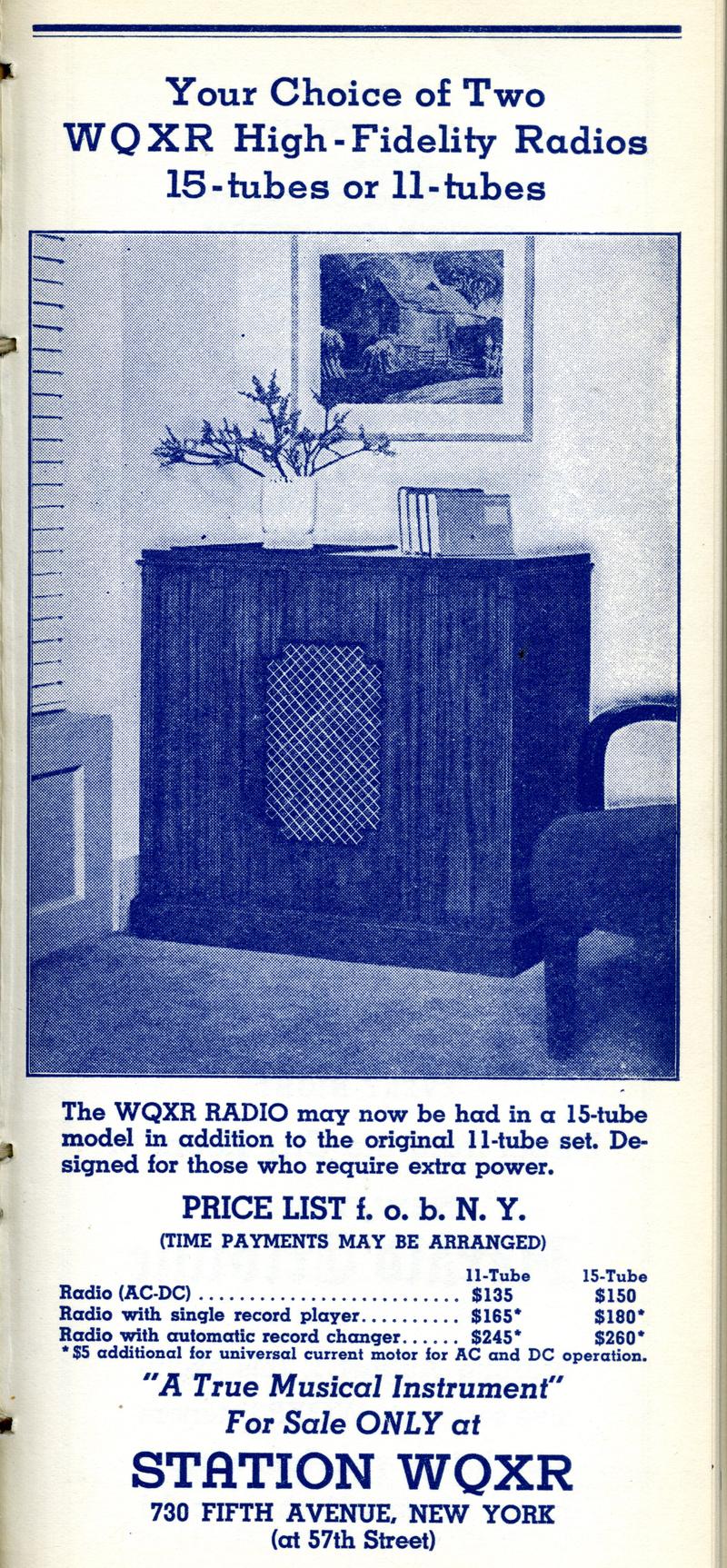
WQXR (then 96.6; now the less desirable 105.9) was better than now. For a bit of interesting history, read WQXR Home of High Fidelity.

WNCN and The Day the Music Died
But the best classical station BY FAR was WNCN (then 104.3). It was run by David Dubal, who had very good programs, My favorite was A Musical Offering, which compared different piano performances of the same work. e.g. with, say, Beethoven's Op.111, he would play a movement played by, say, Bruce Hungerford, Wilhelm Kempff, Claudio Arrau etc. It was enlightening and quite a bit of it is on youtube (this example is on the Pathetique Sonata). I still have his book The Art of The Piano (I think it is a bit US-centric)

When the Station suddenly died, there was a lot of lost people, myself included. Left is the NYT article (you can read the text in this link).

Radio and TV Themes
Many of the Programs of the time have a theme, usually quite beautiful, or elegant, and it took me quite a while to learn what they were. Here is an article (before my time) on Historic WQXR Themes. Some of the programs persisted into the 80's. Steinway Hall has a theme from Bach's Cantata BWV 147, but I think it was a orchestral transcription, without voice.

Basic Repertoire
Bach wrote over 200 Cantatas, so one can understand why some are more popular than others. In the Last Diary (below) I posted some videos of a solo violin in dialogue with a soprano. In Bach's Cantata BWV 147 "Herz und Mund und Tat und Leben" (Heart and mouth and deed and life), the same happens at 12:03 (how beautiful!). Don't stop after you listen to that, as it is immediately followed by one of Bach's most famous tunes (till 19:04; used by WQXR as theme for the program Steinway Hall). This performance is from the church Trogen in Switzerland, performed by the Choir and Orchestra of the J. S. Bach Foundation under conductor Rudolf Lutz. Hana Blažiková is the Soprano. The two ladies are wonderful together.

All Beethoven's Symphonies are essential. Each deserves a lifetime of attention. Now I know all of them by heart, but my first exposure to the transcendental Larghetto from Beethoven's Symphony No. 2 was from the theme for WQXR's Symphony Hall. This performance is from one of the best traditionally (not period style) played cycles, the Vienna Philharmonic under Karl Bohm. Here it is played slower than usual, but that only allow us more time to savor the luminous playing of the VPO. This movement is still one of my favorites.

Now, I can't remember which program (or which station) it was (I think it was WNCN) that used the Adagio of Beethoven's Piano Sonata No. 8 Pathetique as theme. This has always been one of my favorites too. Annie Fischer is the pianist. In this youtube, the third movement plays itself after the slow movement,

Finally, TV programs have themes too. I love the WOR Million Dollar Movie Theme, from Gone with the Wind, composed by Max Steiner.


06 May, 2020

Music of Faith Salute to All Nurses


Alto Delphine Galou; Violinist Francois-Marie Drieux; Les Siecles, Conductor Francois-Xavier Roth. 

New York Diary (20-16): Music of Faith, Bach, Beethoven
Muisc in the Time of Corona
Basic Repertoire: St Matthew's Passion; Missa Solemnis

Today is National Nurses Day. I'd like to salute every nurse and their assistants in the world for their incredible sacrifices. My nurse friend Elaine is now living away from her family and has not seen her 6 year old son in quite a while. A round of Applause! Also, a belated Felicidad Cinco de Mayo!

Recently, with streaming, I have gradually listened to more vocal music. Today, I streamed Bach's Saint Matthew's Passion. The Bach Collegium Japan under Masaaki Suzuki has recorded a huge number of Bach cantatas, and I have heard a few of them. For my taste, sometimes they are too safe. Not this round. This monumental work chronicling Jesus' last days is inherently solemn and this performance (review) is excellent in both performance and sonics (as is usual with BIS), and I am posting it in my music column. I had to stop to catch my breath after the heartrending track 36, the famous Alto Aria Erbame Dich, mein Gott (Have mercy Lord, for the sake of my tears). The aria is about Peter's despair after he denied knowing Jesus (info here). It is beguilingly sung by Countertenor Damien Guillon. The youtube included below is a performance of his from much earlier, with the Collegium Vocale under Phillip Herreweghe (one of my favorite period instrument groups). I do think he sings with even more expression in the BIS recording, though I prefer the youtube's lady violinist. It is important to keep in mind it is as much the violinist's music, a duet indeed. No less a violinist than Yehudi Menuhin proclaimed that the violin part of this aria is the most beautiful violin music ever written, and I tend to agree. To have a different perspective, the youtube above is sung by a female alto, though the band plays in period style; this interpretation is faster but just as powerful. It should be mentioned that Les Siecles and Francois-Xavier Roth are a hot act in the classical world now (they even play Mahler). If you read the comments, in one of the videos, a Hindu said he really felt the beauty of the music. Bach's music of Faith gets the message across and soothes, something we need during these times.

After I heard this aria, I just had to share it with you. Back to the violin - in this kind of work it is used to symbolize the divine (usually angel). A parallel can be found in Beethoven. His Missa Solemnis is a much stormier work, but in the Benedictus, the solo violin has a very prominent and tender role and engages in a similar dialogue with the soloists for about 10 minutes or more. It is a most difficult part for the violin as the music is all in the highest registers. In the bottom youtube, in the excellent recording by the Royal Concertgebouw Orchestra under Eugen Jochum, it is played to perfection by the RCO's great Concertmaster, Herman Krebbers (his several Philips recordings as soloists are coveted items). You can actually watch him in a later performance under Leonard Bernstein, though the resolution leaves something to be desired.

Different people look at religion and music differently. Some peoples and religions frown upon music. Music stirs the soul but some suspect it as a corrupting influence. Atheist peoples use music as entertainment. Fortunately, in the Western tradition, music has always been used to glorify God; otherwise, we would not have this genre of music. As religion plays less and less of a role in our lives, it is hard not to think that plays a role in the decline of classical music.


04 May, 2020

The Truth Line Stage & Active Buffer With Light Dependent Volume Control

The Truth as it sits in my system today

By mrgoodsound


I would like to write about a pre-amp (specifically a line stage) that has been part of my system since late 2018, and will continue as a mainstay for the foreseeable future.

Background

The 'Truth' line stage is built by Ed Schilling of thehornshoppe. I am inspired to write an article about it as it is certainly a unique component which defies the mainstream, and some internet discussions about this unit have some misinformed opinions. I first learned of the 'Truth' from Arthur Salvatore's original essay on it in 2016. At the time, it unseated his reference active Coincident Statement Line Stage and passive EMIA autoformer volume control, and his writing on it made me extremely curious - though I wouldn't be able to act on that curiosity until years later. I will note that while I do not agree with everything Arthur Salvatore has ever published, I admire his application of deductive reasoning and rational thinking towards audio. His original essay on the 'Truth' contains the most coherent explanation of the active vs. passive line stage argument I have ever read.

I will try to keep the technical explanation simple. The Truth is a unity gain (0dB) solid-state buffer which uses light-dependent resistors (also referred to as a photoresistor or photocell) to attenuate the input signal and provide balance control. Basically a LDR is a resistor which has variable resistance based on the intensity of light reflected on its surface. The Truth contains two potentiometers, however the signal does not pass through the contacts of either. Instead, these are used to adjust the intensity of a light source (an LED) being reflected onto the photocells, to control the level of attenuation or balance.

The Truth is not the only device on the market which uses LDRs in this manner, there are the more commonly known Tortuga LDR and Lightspeed Attenuator. However, it is critical to point out both of these devices are passive - they have no input or output buffering - and in my opinion markedly inferior to The Truth for this very reason.

The Truth also contains a simple transistor-based input and output buffer; and two regulated switch-mode power supplies, one per channel. My unit has the optional remote control, which adds another IR sensor board and motorizes the potentiometer. A picture of the internals of The Truth are below, borrowed from Roger McCuaig of TNT Audio with my labeling in red. I did not take a photo inside my own unit as it is actually rather difficult to open. Roger did provide the only other decent review of The Truth I have seen apart from Arthur Salvatore's, so check that out here. As an aside, I am a fan of TNT Audio's publications with their independent writing team and exploration of less mainstream components.

My Experience

Throughout the period of time I have owned The Truth, I have been able to use it in a wide variety of system configurations with a variety of power amplifiers and speakers. I have also loaned it to several local audiophiles, just to get their opinion. Only in one case was The Truth not a good match - the system's owner had a CD player with 2.0V RMS output, 90dB/w Yamaha NS-1000s, and an Audio Research VT200 power amplifier with an input sensitivity of 2.5V RMS for full rated output. There was not enough gain, though replacing his existing active pre-amp with The Truth yielded much better sound, even without the ability to crank it up. In every other case, The Truth immediately and undeniably outperformed every pre-amp or line stage it replaced. It simply has the least electronic character of any component I have owned and in many cases cannot be distinguished from a direct connection to the source! Sometimes, it even sounds better than a direct connection, as its buffering capability resolves impedance mismatch or input stage drive issues.

Internals of The Truth line stage
My current system configuration is perfect for The Truth. I have a DAC and phono stage with low-impedance 4.0V RMS triode output stages, a valve amplifier with three cascades and no volume control. I definitely do not require gain, but I do need a way to adjust volume, adjust balance and switch between multiple sources. The Truth is perfect for my application as it allows me to do these things while being barely distinguishable from a direct connection between my source and my amplifier. In his original essay, Arthur Salvatore rated a direct connection as '100', and The Truth as '97'. I would agree with this, the loss of 3 points can be attributed to the slightest softening of transients, and it is difficult to even assign this solely to The Truth, as another pair of interconnects are also present versus a direct connection.

In some ways, it is the perfect separate box line stage, though it is not a perfect component. It is not a component for the faint of heart. There are no on/off, mute or mono switches. Though I am personally a fan of scrappy looking gear, it is a rather cheap looking black box that barely weighs 1 lbs. Due to the nature of the balance control, the balance drifts once the unit is turned off and on, and the center position on the balance knob is not the center between the two channels, so balance must be set by ear. Due to the nature of the volume control, there is a very large portion of the volume pot which is useless and a small portion which is critical, though this will depend on the efficiency of your speakers and the gain structure of your system. I have 100dB+ efficient speakers and can hear mechanical noise from the motorized potentiometer when adjusting volume. The remote volume control is extremely finicky, the remote must be pointed directly at the unit for it to register any input, and the + and - buttons on the remote must be gently tapped, or you will get major adjustments.

I live with all these quirks because of what The Truth offers. Describing its sound is rather pointless as it has little electronic character of its own. It is easier to describe what is often observed when replacing an existing pre-amp or line stage with it.

When replacing an active line stage with The Truth, you will lose the coloration of that specific component (this can be a good or bad thing), but you will almost certainly gain sharper transients and leading edge; greater intelligibility; vividness; spatial impression; emotional mobility and a sense of appropriateness with regards to the distribution of sound, as it relates to intonation, rhythm, dynamics, etc.

When replacing a passive line stage with The Truth, the above still applies varying with the quality and application of the passive line stage - but even more emphasis on vitality, dynamics, energy, life!

Future Considerations

Is The Truth a must-have? No, it is not actually necessary in all system configurations to have a separate line stage. Pretty soon, this will likely include my own system. I have also not been able to compare it critically to an active line stage with gain that I consider worthy, though I am conflicted on what this would look like, even theoretically. Certain designs, such as those involving capacitor or transformer coupling, are likely out of the question if clarity of sound is to be matched. However, the sound character of an active line stage with gain may be desired or even necessary in some systems. I hope to be able to compare it in the near future with two OTL tube buffers, using standard ALPS potentiometers for signal attenuation, and draw more concrete conclusions about its sound character (or absence thereof).


27 April, 2020

Streaming Naxos Music Library Classical Music Magazines


Click to enlarge. Micromega MyDAC next to Elekit preamp. Blue Ray player beneath Akitika amp.

New York Diary (20-15): Streaming Classical in Time of Corona
Guide to Classical Magazines
My small System for Streaming.
Naxos Music Library, II

Previous Article on the NML via NYPL

For the longest time, this blog has covered classical music. But for almost a month, since I set up my system in the living room, I haven't updated the music column. Recently, having received a few surprising, and encouraging, feedback (some on my YouTube Classical Basic Repertoire), I felt I have to start streaming again so as to find more current offerings to recommend. As I now spend all of my waking hours in the LR, first thing is to set up a small system there:

DAC: Micromega MyDAC (Kimber KCAG)
Preamp: Elekit TU-8500 (old Audio Note AN-V)
Amp: Akitika GT-102 (Acrotec 6N-1010)
Loudspeakers: Audiomaster LS3/5A (15 ohm)
Stands: el-cheapo generic stand used without spikes
Blue Ray Player: Sony S-5000ES (Audio Out; Canare 2T2S)
Turntable: Audio-Technica AT-PL120/Denon DL-301ii

Basically, this is moving out part of my System III (sidebar) into the LR. As is my wont, it starts simple but is likely to get more complicated as I go along. A note on the BR player; as denoted by the ES suffix, this was Sony's well reviewed flagship BRP (here), one I acquired when it was closed out but it has seen little use in the last decade. Sony players are known for their sonic excellence (even my el-cheapo BDP-190, which I wrote about preferring it to Weiss)

Before I moved on to Streaming, I played a few CDs to ensure the sound was of good quality. Having confirmed that, I used (via wifi) an old loaner Dell laptop nominally running Windows 10 (originally a Windows 7 unit). My favorite USB cable was not long enough and I had to compromise and use a generic USB extension cable to reach my seat. Even then, despite occasional crackles, sound was good enough, even better than it was in the audio room. Regrettably, I cannot add a sub now, because it is being used in the big system behind. But the sound was fuller and surprisingly bassier than before in the audio room. I think this is as much due to use of the wood based stands (the ones in the audio room are much higher quality Sonus faber stands with spikes) as a tubed preamp.

As before, I accessed the NML through the NYPL. Since the modem is in the LR, the connection is now better than in the audio room. The only times I get disconnected is when I concurrently visit websites with a lot of ads and videos (like news sites), no doubt due to the aged computer's lack of capacity.

How to Start? Faced with over 150K discs, one realizes too much is too much. For me, I am only interested in relatively new recordings. And for every great composer, there are a hundred lesser ones that only specialists may be interested in. So, browsing is not as easy as pulling items off the shelf in the Performing Arts Library. It is much easier to find specific discs than to browse. For the beginner, it'd be even more daunting. Therefore, it is much easier to rely more on classical music websites (including this blog) for some recommendations. Before we visit them, a few pointers.

Online CD Reviews There is a lot out there. Even more than audiophiles, classical music listeners in a vaster universe listen in different ways, and have different preferences:
  • The same recording (especially the daring ones) can polarize opinions. If you are curious about a certain recording, it is good to read more than one review to get the gist. Take one of the albums I listened to, the Sibelius 2nd conducted by Rouvali, as an example: it's highly praised here but severely panned here. Me? I think it is somewhere in the middle and I can understand both views, but I stop short of a general recommendation. In this blog, when I decide I like a recording, I recommend it and include a link that I agree with, but that doesn't mean sometimes there won't be a dissenting opinion.
  • Critics all have bias, even serious ones, and can be nationalistic. Just like audiophiles, some may prefer a big fat sound, others a more pacey delivery. Some like their baroque music to be played in historically informed fashion (like lack of vibratos), others still cling on to older, more romantic ways of playing. American Critics tend to think US orchestra are the most virtuosic (I prefer European Orchestras, especially the ones formerly in East Germany, for their subtlety and refinement). Even more than that, UK critics are widely alleged (especially by US critics) to easily pander to their own musicians (I think that is at least a half truth).
  • Amateur User Reviews That includes me. Many professional critics read music, whereas this is not the case for amateurs. However, music is for all, and even a musician's feeling and opinion may not be right for you! Amazon reviews can also be interesting, and some commentators are quite experienced.
  • Vendors Many vendors include quotes of reviews, and they can be useful. Prestomusic is a large UK vendor and its homepage has some useful info on new releases etc. On many albums, there are capsular reviews from subscription UK magazines that are useful and otherwise not available. The US vendor ArchivMusic also frequently have such reviews from both UK and US magazines (but less so now).
  • Forums and Composer Sites There are all kinds of sites devoted to reviews, discography of artists and composers. Many of these have informative posts on a certain topic.
Best Of Many sites have some "Best" articles (some detailed below). These can be useful to the newbie.

Classical Magazines Once you know what you want an opinion on, it is easy, just google and many reviews will come up. But what if you just want to browse, read a webzine like you would a print magazine? There are of course some very good ones that one has to subscribe to, but there are also some free internet sites. I'll start with my favorite (even if I don't read it as a zine, only selected reviews).

Free Webzines
MusicWeb-International This UK site is the most comprehensive free webzine. The reviews, though not without a bit of pro-UK bias, are mostly fair and sometimes more than one reviewer will review the same disc and give different opinions. There is a lot to this magazine, including surveys of composers like Mahler. A very useful feature is the Monthly Indexes, where the best albums of the year are listed. I just perused this and have listened to several album;, some I like and they end up in my music column, some not so enthusiastic about. And then there are good performances that I listened to (like Edward Gardner's Schubert cycle, or Lepauw's mammoth complete Bach Well-tempered Clavier) and liked but decided they are only for more advanced listeners. It will likely take one years to go through what they recommend over the years!

Classics Today This US site is about 2/3 free. It has good reviewers, the straightest shooting of which is David Hurwitz, who often trashes more wayward readings. If he says something is good, it usually is. If he trashes it, you might find it praised by others and still like it. the other writers are good too (you might recognize Robert Levine as also a Stereophile writer).

All Music Guide AMG used to issue heavy and comprehensive books (I still have two, one on classical, one on rock) but is now web only. It is free but coverage is not as extensive as some others. I find the reviewers very reliable though.

Classical-Music This the official UK BBC Classical Music Magazine website, which only lists a few Monthly Choices, but they can be useful. This is a pretty good magazine that I used to borrow from the library in HK.

Subscription Magazines
The best magazine in terms of comprehensive coverage is UK's  Gramophone. This magazine has the longest history, dating to before the war, and there are some very old reviewers around. This is valuable for their historical insights and recollections. This magazine though is a little more patronizing to UK institutions, understandably given such a tradition. I used to read this religiously in HK. Too bad that the Queens Library system does not subscribe to a single classical magazine (though they have jazz' Downbeat). The website has some free articles that are useful, like the 50 Best Recordings series on the right, useful for beginners.

The best of the US magazine is the ultra-conservative and very good American Record Guide. It has almost no pictures (no pic of album cover, a shortcoming) and few ads. I like it a lot more than the other one, Fanfare.

Postscript: I am currently addicted to streaming, and shall soon rejuvenate the Music Column. Also, this little system is going to get further development. Maybe it is time to match the BRP to a generic DVD player for use as transport (remember our Russian friend?).  Maybe a bit of phonoamp shootout also. Maybe adding back the sub. Too many maybe's....

Basic Repertoire
My recommended Astor Piazolla album in the Music Sidebar has one of his most popular tunes, Oblivion. But here is Piazolla's most famous tune, Adios Nonino, played by the great man himself. Incomparable.

19 April, 2020

Identity Diaspora Kindness


Top: TheStern Family in Shanghai. Would everyone smile like that! Bottom: 11 year old Stern practising in China.

NY Diary (20-14): Identity, Diaspora, and a Good Man

Although this Diary Entry is related to the last, it does have a real music angle: it is the fascinating story of two accomplished musicians. But first, a little bit of Chinese History.

Who are the Chinese? Westerners usually equate the Chinese with Han Ethnicity, but it is not as simple as that. The History of China is so immensely long (and recorded long before Western peoples started to do so) and complicated that it confuses almost all of us. It is commonly said the Han (taken from the name of a Dynasty) civilization started North of the Yellow River, regarded as the Mother River of China. Many parts of Southern China were not inhabited until later, and originally occupied by peoples called Southern Yi (Barbarians). It is hard to imagine places like Guangzhou (Canton), Shenzhen and Hong Kong used to be sparsely populated! West and North of the Central Part of China, it is a very complex story. For most of its history, China had to deal with Invasions from and Wars with various nomadic peoples. Mongolians and Machurians in the North are the most well known. The former governed China during the Yuan Dynasty (the empire extended to Eastern Europe), and the latter the last dynasty, the Qing (remember The Last Emperor?) And then there were the Five Barbarians and Turkic-Uyghur people to the Northwest and the Tibetans to the West. The to-and-fro was most epic in the North, and lasted for over one thousand years. The intermixing I am sure had led to a lot of genetic re-shuffling, and what we perceive as Han is not a easily defined entity. In Northern China, most people surnamed Ma (as in Yo-Yo), horse in Chinese, are descendants from nomadic (=horse) ancestors. Similarly in the North (not just in Xinjiang, now famous in the news) there are many Muslims who look totally Han but are observant of Halal. So, China was a big melting pot, but it differed from the American story in that it was mostly various Asian and Central Asian races mixing, not as many peoples of different colors.

Jews in China From the Silk Route on, till Israel's existence, there had been a significant presence of Jews in China, first as merchants, then as refugees fleeing various progroms. The first wave of refugees were from the Middle East, who mostly settled in Kaifeng, an old capital city, now in the Province of Henan (South of the River). They are regarded by some as candidate for one of the Lost Tribes of Israel. Their history is fascinating; you may want to read this History of Jews in China. Due to mixing, their descendants now look completely Han. Here is another recent post on Kaifeng Jews now, featuring an 18 year old student from Hong Kong who is Han. The next wave of refugees were Jews fleeing Russia during the Russian Revolution. If you go to the Northen City of Harbin (now hotspot for coronavirus due to re-imported cases from Russia; you can still see a lot Russian architecture). For the next wave, fast forward to the Second World War and the hero of our story.

Western Classical Music in China Starting with Missionary Matteo Ricci (known to every Hong Kong student), Western Expatriates played a great role in bringing Western Classical Music to China. Here is a good summary. And if you want to know even more, read the book Rhapsody in Red (Google Book).


Image result for hellmut sternHellmut Stern (wiki)
On the eve of the Second World War, and during the War, countless number of people in Europe, especially in Germany, found it impossible to obtain visas to go anywhere (including the USA) (remember Casablanca, To Have and Not?). China at the time, at the beginning of the Japanese Invasion, required no visa, and the Chinese Consul in Berlin allowed many, mostly Jews, to escape to China. Hellmut Stern was one of them.

允晨文化-- 台北愛樂FM99.7推薦【弦裂】
In 1938, after the Kristallnacht (November Progrom), Stern, then 10, left Berlin with his parents and fled to Harbin. Life was initially very hard for them, and young Hellmut had to do all kinds of odd jobs, including performing at bars (uhm, what I'd not give to enjoy a pint or two at a bar now!). Later, they made it to Shanghai. They finally left for Israel, then went to the US, before returning in 1961 to Berlin to serve in the second violin section of the BPO. He rose to become Associate Concertmaster in 1984 before retiring in 1991. So, basically he was playing in all the Karajan DG recordings (and some of the EMI), including the Pachelbel Kanon I posted sometime ago. He was known as the Conscience of the Philharmoniker (you will find many nice pictures too).

Hellmut Stern wrote a gripping autobiography in German, Saitensprunge. Unfortunately, this wonderful book had never been translated into English. That I found out about him was fortuitous. Somehow, in Taiwan, I found this book's Chinese translation (still available), and I just loved it. Not only an innately immensely talented individual who overcame multiple severe hurdles to achieve a lot, but also a humanist who knew how to forgive and move forward.

Researching this article I found out that Stern had just died peacefully at home in March. RIP. I wanted to post a youtube of him playing, but there is none. Instead I'd like to introduce another favorite musician of mine who had overcome impossible hurdles to inpspire many others.

Dang Thai Son
After this great pianist's Gold Medal at the Chopin Competition, he recorded an album for DG and then basically disappeared from American radars. Dang (of Chinese extraction) grew up in war-torn Vietnam and his biography on his own site and wiki now totally skipped over his early hardships. I'd venture to guess that the pianist wants no sympathy, to be judged on his merits only, as any great artist would do. However, you can still glimpse a bit of his past history in this SCMP article (excuse the mistake of "Robert" Schubert) on a concert in 2018 in HK. In the 20 plus years I spent in HK before I moved back to NYC, I heard him several times and became a fervent admirer. I actually attended that 2018 concert (only months before I moved back to NYC) and recorded it on my music blog (here). Dang is a totally under-stated person, spiritual shall I say, and he is a legend to many.

Basic Repertoire
Any Chopin is basically Basic Repertoire! Here is one of Dang Thai Son's performances.